

As we age, our skin naturally goes through changes. However, some people notice these changes happening faster than others. You may be wondering, Why is my skin aging so quickly? If you’re noticing wrinkles, sagging, or dryness earlier than expected, you’re not alone. But don’t worry, there are ways to understand and manage the factors that are speeding up your skin’s aging process.
This blog will dive into the reasons why your skin might be aging faster than you’d like and provide tips on how to protect it. Understanding the causes and signs of skin aging can help you take control and make more informed choices to preserve your youthful glow.
What Happens to Your Skin When You Get Older?
As you age, your skin undergoes natural changes, some of which can be more noticeable than others. These changes are part of the skin’s normal aging process, but how they manifest depends on both intrinsic and extrinsic factors.
Intrinsic aging is the biological process that occurs naturally, driven by genetics and time. As you age, your skin loses collagen, which is responsible for its structure and elasticity. This leads to the skin becoming thinner, less firm, and more prone to sagging. The skin’s ability to retain moisture also diminishes, making it look drier and more prone to wrinkles.
On the other hand, extrinsic aging is influenced by external factors like UV exposure, pollution, smoking, and lifestyle choices. Over time, these factors can accelerate the natural aging process. Sun exposure, for instance, causes photoaging, leading to wrinkles, age spots, and a leathery appearance.
In short, while aging is inevitable, the degree and speed at which your skin shows these changes can be influenced by how well you protect it.
Why is Your Skin Aging Too Fast?
If you’ve found yourself asking, “Why do I look older than my age?”, it could be due to a combination of lifestyle choices, environmental factors, and even genetics. Skin aging is not only about the passage of time but also about how your daily habits, external exposures, and even stress affect your skin’s ability to stay youthful. Let’s explore some of the most common reasons your skin might be aging faster than you’d expect:
Sun Damage: The Silent Skin Agitator
The number one culprit behind premature skin aging is sun damage. Even if you don’t notice it right away, UV rays can deeply affect the skin over time. Think of it like a slow burn while you’re out in the sun, your skin absorbs the UV rays and starts to break down collagen and elastin, the proteins that keep your skin firm and smooth.
The result? Wrinkles, sagging, and age spots that appear far earlier than you expect. If you’re wondering why your skin looks older than your age, sun damage might be a significant factor.
If you’re spending more than 10 minutes outdoors, wear a broad-spectrum sunscreen with SPF 30 or higher. And don’t forget to reapply every 2 hours.
Blue Light Exposure: The Digital Culprit
In today’s tech-driven world, we’re glued to our screens. Whether it’s your phone, tablet, or computer, the constant exposure to blue light is doing your skin no favors. Research suggests that blue light, emitted by screens, can penetrate deeper layers of skin and contribute to oxidative stress.
Over time, this accelerates the breakdown of collagen and leads to pigmentation issues, fine lines, and dullness. Invest in blue light-blocking glasses or use screen protectors that limit blue light exposure.
Chronic Stress: The Hidden Agitator
It’s no surprise that stress affects your mental health, but did you know it can also age your skin? High levels of cortisol, the stress hormone, break down collagen in the skin, which leads to wrinkles and sagging. If you feel like you’re always looking older than you should, stress could be playing a significant role in accelerating skin aging.
Try incorporating stress-relieving habits like yoga, meditation, or deep breathing exercises into your daily routine. Not only will this improve your mood, but it will also help keep your skin looking youthful.
Lack of Sleep: The Skin’s Overnight Repair Dilemma
Your skin regenerates while you sleep, but if you’re not getting enough rest, the natural repair process slows down. Chronic sleep deprivation increases cortisol levels and decreases blood flow to the skin, which means you wake up with more visible signs of aging, like under-eye bags and dull, tired skin. If you’re not getting your 7–9 hours of quality sleep, your skin is suffering.
Make sleep a priority. Invest in a relaxing bedtime routine to help you wind down and ensure you get the rest your skin needs to repair itself.
Smoking: The Double Whammy for Skin
Smoking isn’t just bad for your lungs; it’s a major contributor to skin aging. The toxins in cigarette smoke damage collagen and elastin, and the repetitive facial movements (like pursing your lips) lead to wrinkles.
Plus, smoking reduces blood flow to the skin, depriving it of the oxygen and nutrients it needs to stay youthful. If you’re looking in the mirror and thinking, “I look older than I should,” smoking might be a factor you’ve overlooked.
Pollution: The Invisible Skin Stressor
Living in a city or in high-pollution areas can have a significant impact on your skin. Airborne pollutants like dust, dirt, and chemicals can create free radicals, which damage skin cells and accelerate the aging process.
Pollution makes your skin more prone to dryness, wrinkles, and discoloration, contributing to that “looking older than your age” feeling..
Poor Diet: The Skin-Starving Culprit
A diet rich in processed foods, sugars, and unhealthy fats can age your skin faster than you think. High sugar intake causes glycation, a process where sugar molecules attach to collagen and make it stiffer and more brittle.
This leads to more visible wrinkles and sagging. Without enough vitamins, minerals, and healthy fats, your skin struggles to repair itself and stay plump.
Add more antioxidant-rich foods like berries, leafy greens, and fatty fish like salmon to your diet. These nourish your skin from the inside out, helping to maintain elasticity and hydration.
Signs Your Skin Is Aging Faster Than You Think
Let’s take a closer look at the changes that might indicate your skin is aging faster than you’d like.
Skin Aging Signs, Causes & Fixes
| Skin Aging Sign | Cause | Fix |
| Fine Lines | Sun exposure, collagen breakdown | Use retinoids, apply SPF daily |
| Sagging | Loss of collagen & elastin | Moisturize daily, use firming serums |
| Dryness | Lack of hydration, weakened skin barrier | Drink more water, use hydrating moisturizers |
| Age Spots | UV damage over time | Use Vitamin C or niacinamide serums |
| Thinning Skin | Collagen loss, aging | Moisturize regularly, strengthen skin barrier (ceramides, squalane) |
| Enlarged Pores | Loss of elasticity, buildup of dead skin | Gentle exfoliation (BHA), pore-tightening toners |
How to Prevent Premature Skin Aging
While we can’t turn back the clock, we can certainly slow down the hands of time when it comes to our skin. The good news is, preventing premature skin aging doesn’t require drastic measures small, consistent changes to your lifestyle can make a big difference in how your skin looks and feels.
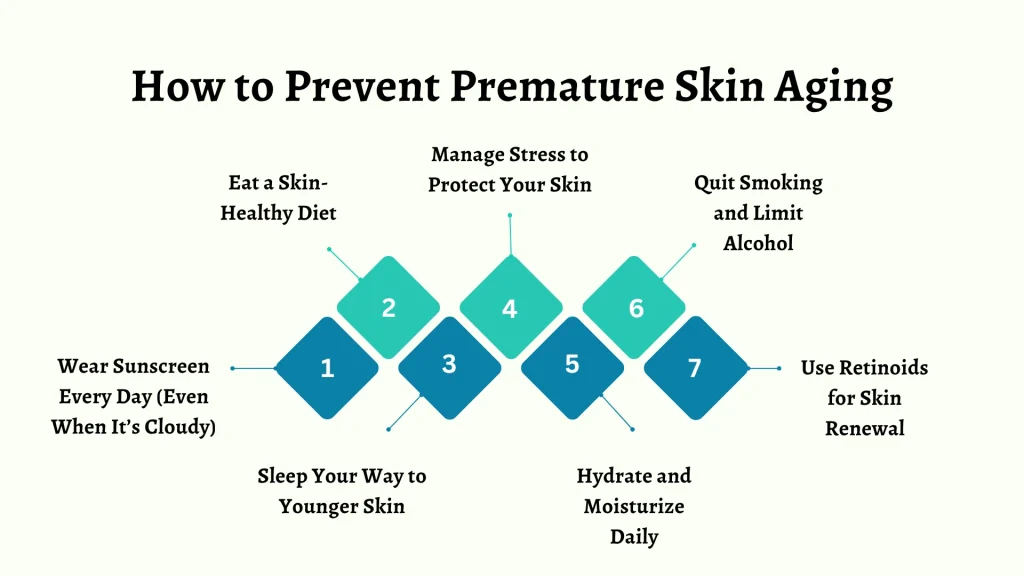
1. Wear Sunscreen Every Day (Even When It’s Cloudy)
Let’s start with the most important step: sun protection. UV damage is the leading cause of premature aging, and it’s responsible for up to 80% of visible signs like wrinkles, age spots, and sagging. Even on cloudy days or indoors, UV rays can still reach your skin, accelerating its aging process.
Apply a broad-spectrum sunscreen with SPF 30 or higher every day, even if you’re just staying indoors. If you’re out for long periods, reapply every two hours.
2. Eat a Skin-Healthy Diet
What you put in your body directly affects how your skin ages. A diet full of antioxidants, healthy fats, and hydrating foods helps protect your skin from the inside out. Foods like blueberries, tomatoes, spinach, and salmon contain nutrients that fight free radicals, reduce inflammation, and support collagen production.
Incorporate more omega-3 fatty acids (found in fatty fish and flaxseeds) and vitamin C-rich foods (like citrus fruits and bell peppers) into your meals. Hydrate regularly with water to keep your skin plump and radiant.
3. Sleep Your Way to Younger Skin
Sleep is when your skin does most of its repairing and regenerating. If you’re getting less than 7 hours of sleep a night, your skin won’t be able to recover as effectively, leading to fine lines, dullness, and sagging. Lack of sleep also increases cortisol, the stress hormone, which breaks down collagen and accelerates aging.
Prioritize quality sleep by aiming for 7–9 hours a night. Create a relaxing bedtime routine and avoid screens for an hour before bed to help improve your sleep quality.
4. Manage Stress to Protect Your Skin
It might sound surprising, but stress can age your skin faster than you think. High levels of cortisol not only cause inflammation but also lead to collagen breakdown, resulting in wrinkles and sagging. If stress is left unchecked, it can accelerate the appearance of aging.
Find stress management techniques that work for you, whether it’s yoga, meditation, walking, or even spending time with loved ones. Reducing stress will not only improve your skin but also boost your overall well-being.
5. Hydrate and Moisturize Daily
Dehydration is one of the most common culprits of premature skin aging. When your skin is dry, it emphasizes fine lines and gives you a tired, dull appearance. Keeping your skin moisturized helps maintain its elasticity and smoothness.
Drink plenty of water throughout the day and use a rich moisturizer that suits your skin type. Look for products that contain hyaluronic acid, glycerin, and ceramides to lock in moisture and repair the skin barrier.
6. Quit Smoking and Limit Alcohol
We’ve all heard that smoking is bad for your lungs, but it also wreaks havoc on your skin. Smoking constricts blood vessels, limiting the oxygen and nutrients that reach your skin, leading to dryness, wrinkles, and a dull complexion. Similarly, excessive alcohol can dehydrate your skin and lead to sagging over time.
Quit smoking if possible, and try to reduce alcohol consumption. These changes will help preserve your skin’s youthful appearance.
7. Use Retinoids for Skin Renewal
As we age, our skin’s ability to regenerate slows down. Retinoids (a form of vitamin A) are proven to stimulate collagen production, smooth out wrinkles, and even out skin tone. Adding a retinoid cream to your nighttime skincare routine can boost your skin’s renewal process, making it look younger and more radiant.
When to Seek Professional Help for Skin Aging
While lifestyle changes can slow down the aging process, some signs of premature aging may require professional intervention. Here are key moments when it’s time to consult a dermatologist:
Sudden or Severe Skin Aging
If you notice rapid wrinkles, sagging, or age spots earlier than expected, professional advice is essential. A dermatologist can determine whether these changes are normal or a sign of more significant skin damage.
When Skincare Products Aren’t Enough
If over-the-counter products aren’t delivering results, consider professional treatments like retinoids or chemical peels that go beyond standard skincare to target deeper skin layers.
Deep Skin Damage
For extensive sun damage, deep wrinkles, or pigmentation issues, treatments like microneedling or laser therapy can help rejuvenate the skin and restore a more youthful appearance.
Personalized Skincare Plan
A dermatologist can create a tailored skincare plan based on your skin type, addressing specific concerns like dryness, wrinkles, or age spots.
Regular Maintenance
Routine visits to a dermatologist can help maintain skin health, address emerging issues, and keep your skin looking youthful long-term.
Conclusion
Aging is a natural part of life, but when skin shows signs of aging too soon, it can feel overwhelming. However, understanding the causes and signs of premature skin aging can empower you to make informed decisions about how to protect your skin.
By implementing healthy lifestyle changes, using the right skincare products, and seeking professional guidance when necessary, you can slow down the effects of aging and keep your skin looking its best. Remember, prevention is key, and making small adjustments today can lead to long-lasting improvements.
If you’re noticing more signs of aging than you’d like or if your skincare routine isn’t cutting it, don’t hesitate to book a consultation with one of our skincare experts. We’re here to help you develop a personalized plan to combat premature skin aging and restore your skin’s youthful appearance.