


According to clinical data, more than 50% of women experience at least one UTI in their lifetime, and a significant number report non-urinary symptoms such as lower abdominal pressure, nausea, or bloating. When the bladder becomes inflamed, it sits very close to the intestines. This inflammation can irritate nearby organs, slow digestion, and lead to gas buildup or a bloated feeling.
Additionally, UTIs can trigger changes in appetite, hydration levels, and gut bacteria, especially if antibiotics are involved. These factors can further disrupt digestion and make bloating feel worse during recovery.
While mild bloating can be normal during a UTI, persistent or worsening abdominal symptoms should not be ignored, as they may signal complications or the need for medical evaluation. Understanding this connection helps patients recognize when symptoms are part of the infection and when it’s time to seek care.
Common Symptoms of a UTI
Recognizing the full spectrum of symptoms can help patients seek timely care and avoid complications.
Typical UTI Symptoms
Most UTIs share a set of core symptoms, including:
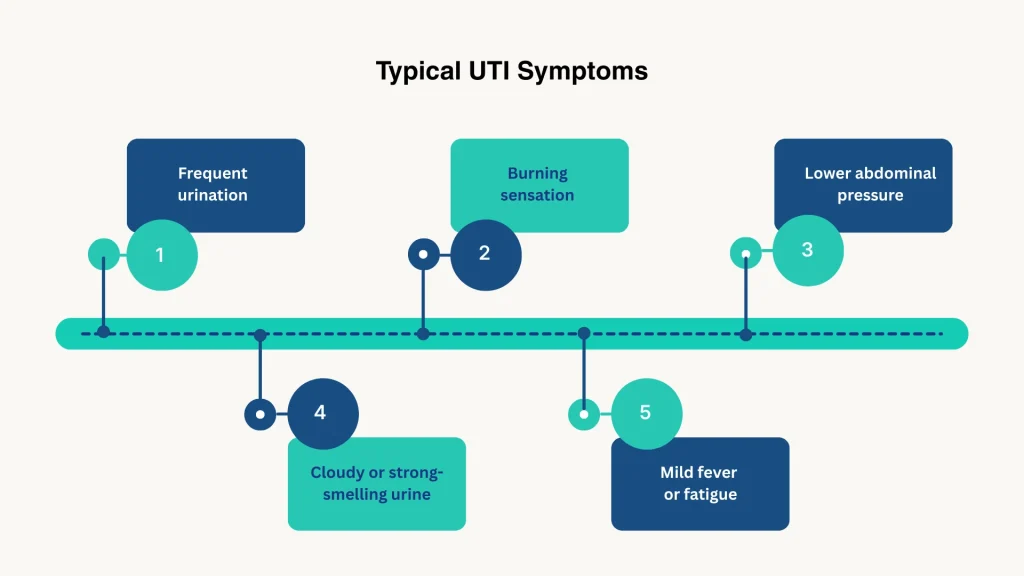
Frequent urination: The urge to urinate more often than usual, sometimes with only small amounts of urine.
Burning sensation: A common sign of bladder inflammation, causing discomfort or pain during urination.
Lower abdominal pressure: Patients may feel heaviness or cramping in the pelvic region.
Cloudy or strong-smelling urine: Changes in urine color or odor can indicate infection.
Mild fever or fatigue: Low-grade fever may occur, especially if the infection is spreading.
Studies indicate that over 80% of adult women with UTIs experience frequent urination and burning sensations, making these the most recognizable signs.
Digestive and Less Obvious Symptoms
UTIs can also produce indirect digestive symptoms, which many patients may not immediately associate with a urinary infection:
- Bloating and gas
- Nausea or mild stomach discomfort
- Constipation or changes in bowel habits
- Loss of appetite or mild abdominal cramps
These symptoms are especially common in cases where antibiotics are being used, as the gut microbiome can be temporarily disrupted.
How to identify a UTI in a toddler
Identifying UTIs in toddlers can be more challenging. Look for:
- Irritability or fussiness
- Fever without a clear cause
- Wetting accidents in previously potty-trained children
- Abdominal discomfort or poor feeding
Tip: If a toddler shows persistent abdominal discomfort and urinary changes, consult a pediatrician promptly. Early detection can prevent complications like kidney infections.
By understanding both typical and less obvious symptoms, patients can better monitor their condition and seek care at the right time, ensuring effective treatment and reducing the risk of recurrence.
Why Am I Bloated and Gassy with a UTI?
Bloating and gas can sometimes accompany a UTI due to bladder inflammation, gut disruption, and changes in digestion. Antibiotics may temporarily alter the gut microbiome, slowing digestion and causing discomfort.
Mild bloating is usually normal and temporary. Keeping a symptom diary, noting urinary changes, abdominal discomfort, and bowel habits, can help your healthcare provider assess your condition more accurately.
Approximately 25–30% of UTI patients report digestive symptoms like bloating or gas.
How to Manage Bloating and UTI Symptoms
There are several strategies to ease abdominal discomfort and promote faster recovery.
Hydration
Drinking adequate water helps flush bacteria from the urinary tract and supports healthy digestion. Avoid carbonated beverages, which can increase gas, and focus on easily digestible foods like soups, steamed vegetables, and whole grains.
Light Physical Activity
Patients often notice that short, frequent walks after meals help reduce abdominal pressure without aggravating UTI symptoms. Avoid strenuous exercise until the infection is fully resolved, as overexertion may worsen fatigue or discomfort.
Symptom Tracking and Medical Awareness
Document urinary patterns, bloating, and abdominal discomfort to provide helpful information to your doctor.
When to go to the Hospital for a UTI
While most urinary tract infections are mild and respond well to treatment, it’s important to recognize warning signs that indicate a more serious condition. Knowing when to seek professional care can prevent complications and ensure a safer recovery.
Early warning signs of a kidney infection
Not all UTIs are the same. Some may spread to the kidneys or cause other systemic problems. Watch for these red flags:
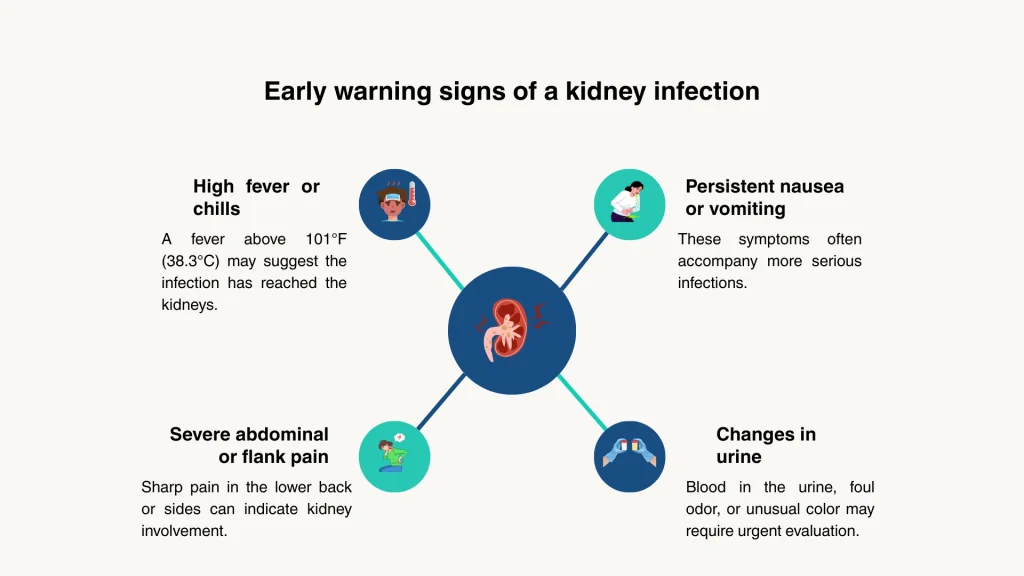
According to the National Institute of Diabetes and Digestive and Kidney Diseases, approximately 2–4% of UTIs in adults can progress to kidney infections if untreated, highlighting the importance of timely medical attention.
Why Early Consultation Matters
Prompt medical evaluation ensures proper diagnosis and treatment, preventing long-term complications such as recurrent infections, kidney damage, or systemic infection. Even if your symptoms seem mild, persistent discomfort or worsening bloating should not be ignored.
Practical Advice
If you notice any combination of the above symptoms, or if bloating is accompanied by urinary changes, schedule an appointment with a primary care provider promptly. Early intervention can reduce recovery time and prevent escalation.
Pro Tip: Keeping a log of your symptoms, including urinary patterns, bloating, and abdominal discomfort, can help your doctor provide more targeted treatment and peace of mind.
By recognizing these red flags and acting promptly, patients can avoid complications while managing their UTI effectively.
Conclusion
Mild digestive symptoms are generally temporary, but persistent or worsening discomfort may indicate complications, such as kidney involvement or antibiotic resistance. Maintaining a symptom diary, including abdominal changes, bowel habits, and urinary patterns, can help your healthcare provider deliver more targeted and effective treatment.
If you are experiencing bloating, urinary discomfort, or any severe UTI symptoms, it’s important to act promptly. For personalized care and professional guidance, schedule a primary care consultation with Glow Primary Care. Early intervention ensures proper treatment, faster recovery, and peace of mind.