


You’re constipated, bloated, and now your stomach is starting to feel queasy, maybe even like you might throw up. It’s natural to wonder: Is this normal? Can constipation really cause vomiting, or is something else going on?
The short answer is yes, in severe cases. While most constipation is manageable at home with fluids, fiber, and movement, there comes a point when the backup in your intestines can pressure your stomach so much that vomiting occurs.
For patients living with chronic conditions like diabetes, heart disease, high blood pressure, or kidney disease, the risk can be higher, and knowing when to act matters.
What Is Constipation? Let’s Keep It Simple
Before we talk about vomiting, let’s make sure we’re on the same page about constipation.
Constipation means you’re having fewer bowel movements than usual, typically less than three per week. But it’s not just about frequency.
You might also notice:
- Stools that are hard, dry, or lumpy
- Straining or pain when trying to go
- A feeling like you haven’t completely emptied your bowels
- Belly bloating or discomfort
Think of your digestive system like a highway. Food and waste need to keep moving. When traffic slows down or stops completely, things back up, that backup is constipation, and when it gets severe, it can push pressure upward into your stomach.
Why Chronic Conditions Make Constipation More Likely
If you live with a chronic condition, you may already be at higher risk for constipation. Here’s why:
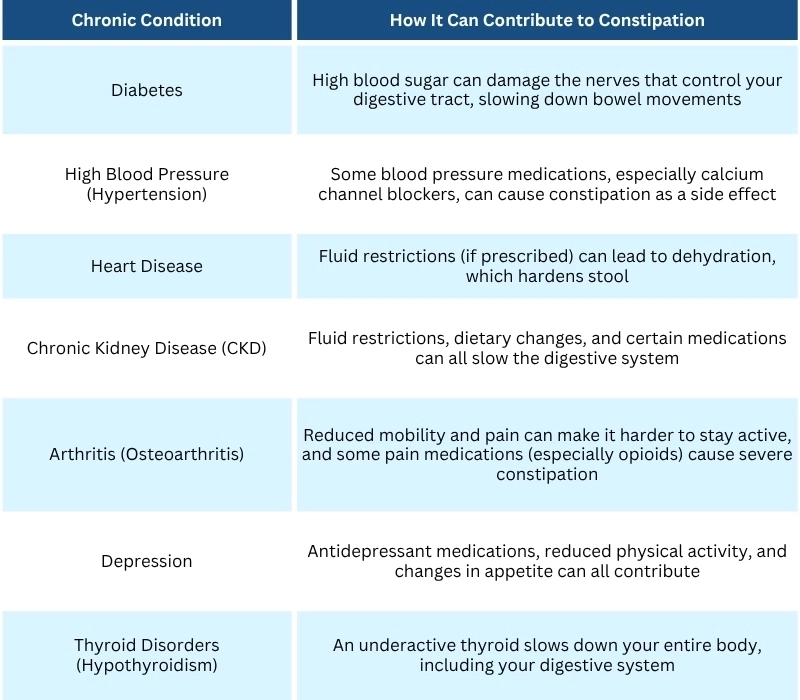
The takeaway: If you have a chronic condition, constipation isn’t just an annoyance. It’s something to watch closely because your risk is higher, and complications can come on faster.
The Main Question – Can Constipation Cause Vomiting?
Yes, but only in more severe cases. Here’s what happens inside your body:
When stool builds up in your intestines for days without moving, it creates pressure. Your intestines are a long, continuous tube. If the lower part gets blocked or severely backed up, the upper part (closer to your stomach) also feels that pressure.
That pressure can push upward against your stomach, triggering that uncomfortable, queasy feeling called nausea. And if the backup becomes severe enough, or if you have a complete blockage, your body may try to relieve the pressure by forcefully emptying your stomach. That’s vomiting.
Think of it like a clogged sink. The water backs up and eventually overflows. Your body is the same: if waste can’t go down and out, it may come back up.
What Does “Severe Constipation” Mean?
Vomit from constipation usually happens when you haven’t had a bowel movement in several days, and the stool has become hardened in your rectum or colon. There is a partial or complete bowel obstruction, or you are also experiencing severe bloating and intense abdominal pain
If you are vomiting and constipated at the same time, do not ignore it. This is your body sending a loud warning signal.
Can Severe Constipation Cause Vomiting in Chronic Patients?
Yes, because chronic conditions already put you at higher risk for constipation, as we covered in the previous section, it can happen faster than in a healthy person.
For example:
- A diabetes patient with gastroparesis (slow stomach emptying) may already have a sluggish digestive system. Adding constipation on top can quickly lead to a backup.
- A patient taking opioids for arthritis pain may develop severe constipation within days, leading to nausea and vomiting if not managed early.
- A heart or kidney patient on fluid restrictions may become dehydrated without realizing it, making stool hard and difficult to pass, leading to impaction.
Bottom line: If you have a chronic condition and you’re vomiting from constipation, don’t wait to see if it gets better on its own.
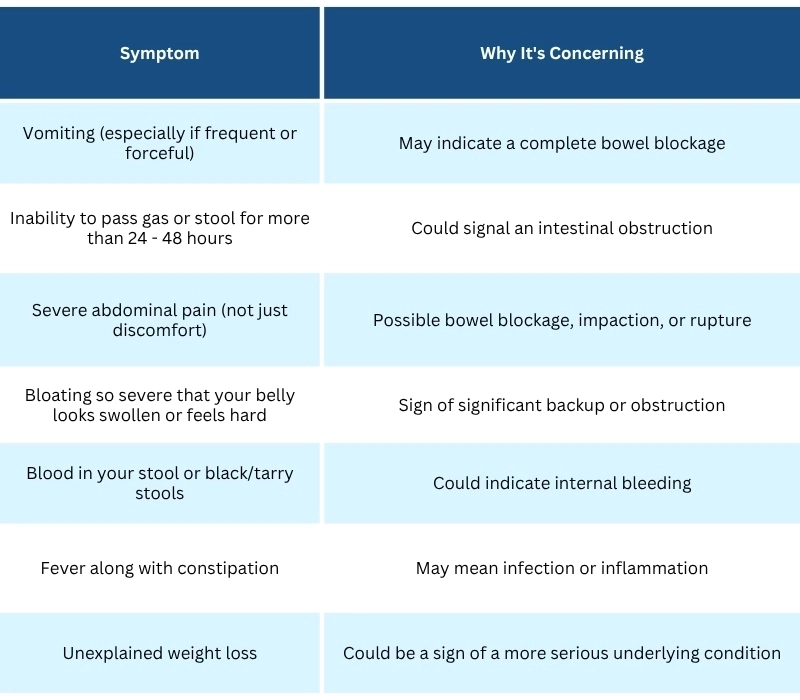
When Is Constipation an Emergency? (Don’t Ignore These Signs)
Most constipation can be managed at home. But certain symptoms mean you need to see a doctor right away. If you experience any of the following along with constipation, consider it a medical warning sign:
Red Flags That Require Immediate Medical Attention
What Is a Bowel Obstruction?
A bowel obstruction is exactly what it sounds like: something is blocking waste from moving through your intestines. Severe constipation can cause this, especially if stool becomes hard and impacted.
Signs of a bowel obstruction include:
- Severe cramping or pain that comes in waves
- Swollen, distended belly
- Loud bowel sounds or no bowel sounds at all
- Inability to pass gas or have a bowel movement
- Nausea and vomiting (often green or brown fluid)
A bowel obstruction is a medical emergency. If not treated quickly, it can cut off the blood supply to your intestines or cause a rupture, both of which can be life-threatening.
For Chronic Patients: When to Call Glow Primary Care
Not every constipation case requires an ER visit. But if you have a chronic condition, you should call Glow Primary Care when:
- You have been constipated for 3–5 days with no relief from home remedies
- You are feeling nauseous but not yet vomiting
- Your usual bowel pattern has changed significantly for no clear reason
- You are starting a new medication that causes constipation (like pain meds or blood pressure drugs)
- You have a chronic condition, and constipation is worsening or not improving
Same-day appointments are available at Glow Primary Care. You don’t have to suffer or wait days to be seen.
When to Go to the Emergency Room (ER) Instead
Go to the ER or call 911 immediately if:
- You are vomiting and cannot keep any liquids down
- You have severe abdominal pain that comes on suddenly
- Your belly is swollen, hard, and tender to the touch
- You see bright red blood in your stool, or your stool looks black and tarry
- You have a fever over 101°F along with constipation
- You have not passed gas or stool in more than 48 hours and are in pain
Do not wait. These symptoms can indicate a bowel obstruction, perforation, or other serious condition that needs hospital care.
What to Do at Home for Mild Constipation (Before It Gets Severe)
If you are not experiencing warning signs, vomiting, no blood, and no pain, you can try these remedies.
- Drink More Water
- Eat More Fiber (But Slowly)
- Move Your Body
- Try a Warm Beverage in the Morning
- Adjust How You Sit on the Toilet
How Long Should You Try Home Remedies?
If you have tried for more than 3-5 days, or if your symptoms are getting worse, its time to see a doctor.
How Glow Primary Care Can Help Chronic Patients with Constipation
At Glow Primary Care, we don’t just treat symptoms. We treat the whole person, especially patients living with ongoing health conditions.
Same-Day Appointments – No Long Waits
Constipation doesn’t wait for a convenient time to show up. That’s why Glow offers same-day appointments. You can be seen by a provider when you need it, not weeks from now.
In-House Labs for Faster Answers
No driving to a separate lab and waiting days for results. We get answers quickly so we can adjust your treatment right away.
Chronic Care Management – Built for Patients Like You
Glow’s Chronic Care Management (CCM) program is specifically designed for patients with conditions like:
- Diabetes
- High blood pressure (hypertension)
- Heart disease
- Chronic kidney disease (CKD)
- Arthritis (osteoarthritis)
- COPD (lung disease)
- Depression
- Thyroid disorders
When We May Refer You to a Specialist
Most constipation can be managed right at Glow. However, if we suspect a more complex issue, like a bowel obstruction, severe impaction, or neurological cause, we will refer you to the right specialist and coordinate your care.
Don’t Wait Until You’re Vomiting
The best time to address constipation is before it becomes severe. If you have a chronic condition and you’ve been constipated for several days, even without vomiting, make an appointment.
Glow Primary Care is here to help you stay ahead of the problem.
Listen to Your Body
Constipation is common. But when it starts to cause nausea or vomiting, your body is sending you an important message: Something is backing up, and it needs attention.
The good news? Most constipation can be treated and prevented. With the right combination of hydration, fiber, movement, and medical support, you can keep your digestive system moving smoothly.
The bad news? Ignoring the warning signs can lead to serious complications like fecal impaction, bowel obstruction, or even emergency surgery. You don’t have to figure this out alone.
Take Action Today
If you are experiencing constipation that won’t go away, or if you have a chronic condition and you’re worried about your digestive health, Glow Primary Care can help.
- ✅ Same-day appointments available
- ✅ In-house labs for quick answers
- ✅ Chronic Care Management for ongoing support
- ✅ Experienced internal medicine providers
Don’t wait until you’re vomiting or in severe pain.
📞 Call us or book online today
👉 Contact Glow Primary Care to schedule your appointment
👉 Learn more about our Chronic Care Management services for patients with ongoing health conditions
Medical Disclaimer
The content provided in this blog is for informational purposes only and does not constitute medical advice, diagnosis, or treatment. It is not intended to replace consultation with a qualified healthcare professional. Do not rely on online information to diagnose or manage any health condition.