


Quick Verdict
Vitamin Water Zero is a better choice than soda or regular Vitamin Water, but it is not a healthy drink. It’s a low-calorie, flavored beverage with plant-based sweeteners and synthetic vitamins. Safe in moderation for most adults, but not recommended as a daily hydration staple.
What Is Vitamin Water Zero?
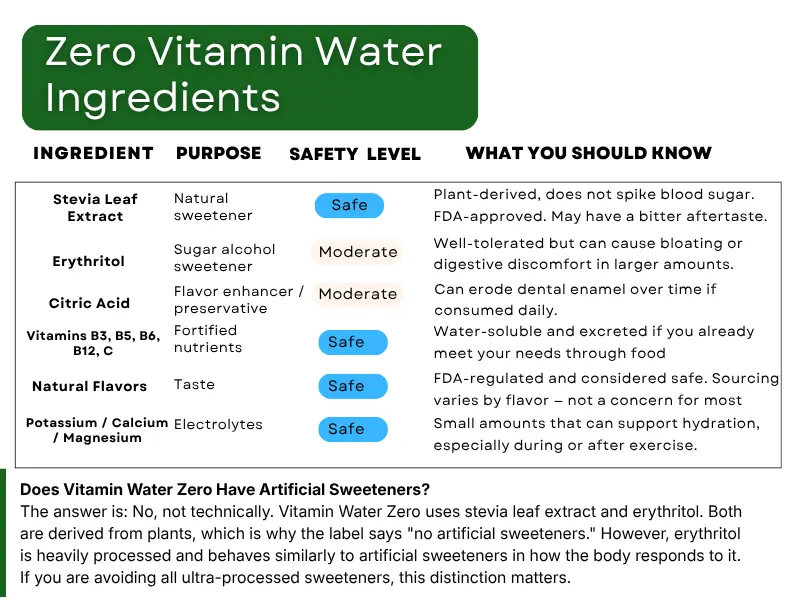
Vitamin Water Zero is a flavored water beverage produced by Coca-Cola. It is the zero-calorie, zero-sugar version of the original Vitaminwater, replacing cane sugar with stevia leaf extract and erythritol, both plant-derived, low-calorie sweeteners.
Each 20 oz bottle comes fortified with Vitamins B3, B5, B6, B12, and C, along with electrolytes like potassium, calcium, and magnesium. It comes in flavors like dragonfruit, citrus, and mixed berry, making it an appealing option for people who want something more flavorful than plain water.
On the surface, it looks like a smart health upgrade. But once you dig into the nutrition facts and ingredients, the picture becomes more nuanced.
Vitamin Water Zero Nutrition Facts (Per 20 oz Bottle)
Here is what you actually get in a full bottle of Vitamin Water Zero, the information the front label doesn’t highlight:

One important note: the vitamins added to Vitamin Water Zero are water-soluble. If you are already getting enough through your diet, your body simply flushes the excess out. You are not “stacking up” nutrients; you are mostly paying for ingredients your body doesn’t need.
Benefits of Vitamin Water Zero Sugar
Despite its limitations, Vitamin Water Zero does have some genuine use cases. Here is when it can work in your favor:
💧Soda Replacement
For people cutting back on soda, Vitamin Water Zero offers a familiar sweetness with zero sugar and zero calories. It is a meaningful step in the right direction.
⚡Post-Workout Hydration
The electrolytes (potassium, calcium, magnesium) can help replenish minerals lost through sweat during light to moderate exercise.
🔢Calorie Reduction
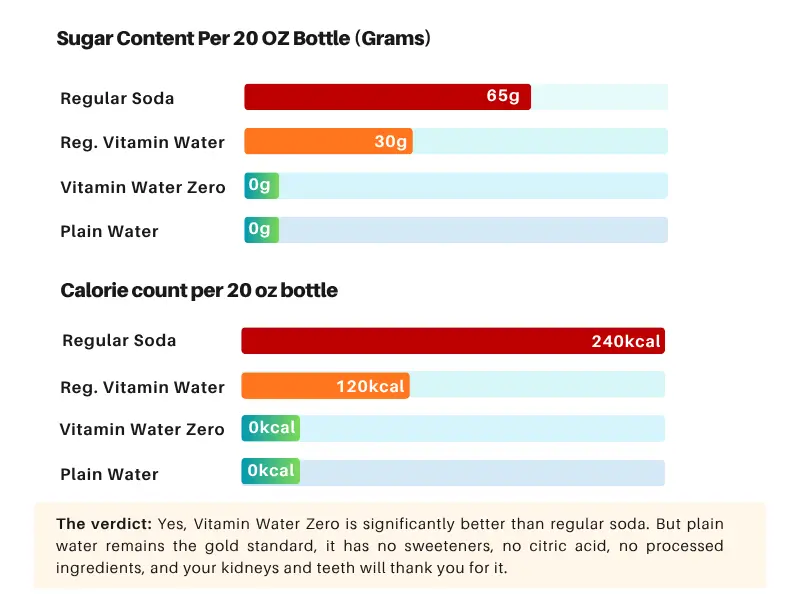
Switching from regular Vitamin Water (120 calories per bottle, 30g sugar) to Zero can cut hundreds of calories per week if you drink it regularly.
💊Light Vitamin Boost
If your diet is low in B vitamins or Vitamin C, the fortification may provide a small supplemental benefit, particularly on days when your diet isn’t ideal.
Important context: these benefits are most relevant for people who would otherwise choose a sugary beverage. If you already drink plain water consistently, Vitamin Water Zero offers little additional health value.
Is Vitamin Water Better Than Soda?
Here is an honest side-by-side comparison of Vitamin Water Zero versus regular soda and plain water:
Is Vitamin Water Good When Sick?
When you’re under the weather with a cold or flu, staying hydrated is critical. Many patients reach for Vitamin Water Zero, thinking the added vitamins will speed recovery. Here’s what our physicians say:
| What it can help with ✓ Provides some hydration when plain water feels unappealing ✓ Electrolytes (potassium, magnesium) can help replace what’s lost through fever or vomiting ✓ Vitamin C content may give a mild immune support benefit ✓ Better than sports drinks, which are high in sugar | What it can’t do ✗Will not cure or shorten your illness ✗Not a substitute for proper medical care ✗The citric acid may irritate an already sore throat ✗Not ideal if you have nausea, plain water or broth is gentler |
Vitamin Water Side Effects You Should Know About
Despite being zero sugar, Vitamin Water Zero is not without potential downsides, especially if consumed frequently or in large amounts:
Digestive discomfort
Erythritol, a sugar alcohol, can cause bloating, gas, or loose stools in some people, particularly those with IBS or sensitive digestive systems. Symptoms are more likely at higher doses.
Increased sugar cravings
Research suggests that sweet-tasting beverages, even zero-calorie ones, can condition the brain to expect sweetness, potentially increasing cravings for sugar and high-calorie foods over time.
Dental enamel erosion
The citric acid in Vitamin Water Zero lowers the pH of your mouth, which can gradually erode tooth enamel. Rinsing with plain water after each bottle significantly reduces this risk.
Cardiovascular concern (emerging research)
A 2023 study published in Nature Medicine found that high blood levels of erythritol were associated with an elevated risk of heart attack and stroke. While more research is needed, people with cardiovascular risk factors should be mindful of their erythritol intake from all sources.
Limited vitamin absorption
The B vitamins and Vitamin C in Vitamin Water Zero are water-soluble. If you already meet your daily requirements through food, these vitamins are simply excreted, providing no additional benefit.
Is Vitamin Water Zero Sugar Good for Diabetics?
This is one of the most important questions for our patients managing diabetes or prediabetes. Here is a transparent breakdown:
Stevia and erythritol do not cause significant blood sugar spikes, which is why Vitamin Water Zero is generally considered safe for people with diabetes in moderation. However, there are important caveats:
- Sweet-tasting drinks (even zero-calorie ones) can trigger appetite and cravings, which can make blood sugar management harder over time.
- Some people show a mild insulin response to sweet taste alone, regardless of sugar content.
- If you take medications that affect kidney function, the electrolyte content is worth discussing with your physician.
Who Should Avoid Vitamin Water Zero?
While most healthy adults can consume Vitamin Water Zero occasionally without issue, these groups should be more cautious:
People with IBS or gut sensitivity
Erythritol can trigger bloating, cramping, and digestive discomfort in people with irritable bowel syndrome or sensitive digestive systems.
Those with cardiovascular risk factors
Given emerging research on erythritol and cardiovascular events, people with existing heart conditions should limit consumption and speak to their doctor.
Children
Kids need hydration from whole food sources and plain water. Sweetened beverages, even zero-calorie ones, can reinforce a preference for sweetness early in life.
People with kidney conditions
Frequent consumption of fortified drinks can add to the filtration burden on already-stressed kidneys. Discuss with your nephrologist first.
Pregnant women
There is limited research on high erythritol intake during pregnancy. Plain water remains the safest and most recommended hydration choice.
Anyone with dental concerns
The citric acid content makes this a poor daily choice if you already struggle with enamel erosion or tooth sensitivity.
Healthier Alternatives to Vitamin Water Zero
If you are looking for flavorful hydration without the trade-offs, these options deliver real benefits with fewer downsides:
🍋 Infused Water
Add lemon, cucumber, mint, or berries to plain water. Natural flavor, trace vitamins, zero additives, and genuinely refreshing.
🥥 Coconut Water
Natural electrolytes, real potassium, and light natural sweetness without artificial sweeteners or citric acid. Best consumed in moderation due to natural sugars.
Herbal Teas (Iced or Hot)
Chamomile, hibiscus, or peppermint tea provides antioxidants, natural flavor, and hydration with no sweeteners or additives needed.
Sparkling Water
Carbonated water with a squeeze of citrus gives the bubbly satisfaction of a soda with none of the downsides. Check labels to avoid added flavors or sweeteners.
Have questions about your nutrition or hydration habits?
Our primary care physicians at Glow Primary Care provide evidence-based, personalized guidance on diet, lifestyle, and chronic condition management, tailored to your health goals.