


A sinus infection might feel like a bad cold, a stuffy nose, pressure around your face, and fatigue. Most people ignore it, hoping it will go away on its own. But what happens when it doesn’t? Leaving a sinus infection untreated can lead to complications far more serious than you might expect.
In this guide, we’ll walk you through exactly what happens when a sinus infection goes untreated, and when it’s time to see a doctor.
What Is a Sinus Infection?
A sinus infection, also called sinusitis, happens when the tissues lining your sinuses become inflamed or swollen. This is usually caused by a virus, bacteria, or sometimes fungi. Your sinuses are air-filled spaces behind your nose, cheeks, and forehead. When they get blocked and filled with fluid, germs grow and cause an infection.
It is one of the most common conditions treated at primary care clinics, affecting millions of Americans every year.
What Happens If a Sinus Infection Goes Untreated?
Ignoring a sinus infection is never a good idea. Without proper treatment, the infection can spread and cause serious health problems.
Here is what can happen when a sinus infection is left untreated.
It Can Become Chronic
When a sinus infection is not treated on time, it can turn into a chronic condition. Chronic sinusitis means the infection lasts for 12 weeks or longer, even with treatment attempts.
Chronic sinusitis causes constant congestion, facial pain, and difficulty breathing through the nose. It significantly affects your quality of life and becomes much harder to treat over time.
It Can Spread to Nearby Areas
An untreated sinus infection does not stay in one place. The bacteria can spread to surrounding areas like your ears, throat, and even your eyes.
This can lead to ear infections, sore throat, or a condition called orbital cellulitis, which is a serious eye infection. These complications require immediate medical attention.
It Can Lead to Meningitis or Brain Abscess
This is the most serious complication of an untreated sinus infection. In rare cases, the infection can spread to the brain and cause meningitis or a brain abscess.
Symptoms include severe headache, stiff neck, high fever, and confusion. If you experience these symptoms, go to the emergency room immediately.
It Can Cause Bone Infection
An untreated sinus infection can sometimes spread to the bones surrounding the sinuses. This condition is called osteomyelitis and is extremely painful.
It is more common in the frontal bone, which is located in the forehead area. This condition requires hospitalization and long-term antibiotic treatment.
How Long Can You Leave a Sinus Infection Untreated?
Most acute sinus infections last between 7 to 10 days. But without treatment, they can stretch much longer and become far more dangerous. Here is a simple timeline of what happens when a sinus infection is left untreated:
| Timeline | What Happens |
| Day 1 to 7 | Mild symptoms, congestion, facial pressure |
| Day 7 to 14 | Symptoms worsen, and bacteria may develop |
| Week 2 to 4 | Risk of spreading to the ears, eyes, and throat |
| Week 4 to 12 | Infection becomes chronic sinusitis |
| 12 Weeks+ | Chronic sinusitis or serious complications |
📊 Did You Know?
| Fact | Stat | Source |
| Americans affected by sinusitis | 29 million adults | CDC |
| Adult population with sinusitis | 11.6% | CDC NHIS |
| Women are diagnosed more often than men | 15% vs 8.8% | CDC 2017 |
| Acute sinusitis cases that are viral | Nearly 90% | NCBI StatPearls |
| Chronic sinusitis duration | 12+ weeks | NCBI |
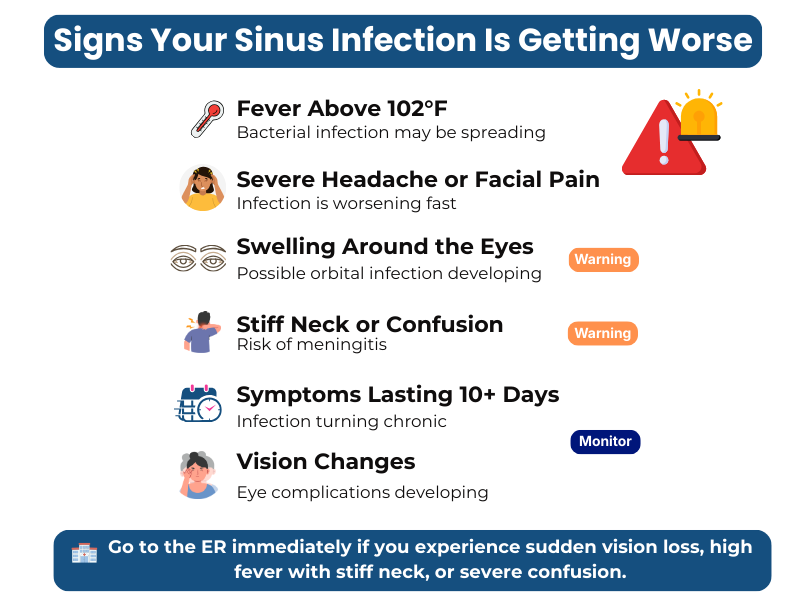
Signs Your Sinus Infection Is Getting Worse
Most people assume their sinus infection is just a bad cold. But there are clear warning signs that indicate the infection is becoming more serious.
Watch out for these red flags:
When Should You See a Doctor?
Many people wait too long before seeing a doctor for a sinus infection. The right time to seek care is when your symptoms last more than 10 days without improvement, or when your fever goes above 102°F.
If you are getting multiple sinus infections in a year, that is your body telling you something is wrong. Recurrent infections are a strong sign of chronic sinusitis and require proper medical evaluation.
One important warning sign most people miss is when symptoms start improving and then suddenly get worse again. This is called “double worsening,” and it usually means a bacterial infection has developed on top of the original viral one.
What Will a Doctor Do?
When you visit Glow Primary Care, your doctor will first examine your nasal passages and review your symptom history. Based on that, a personalized treatment plan is created for you.
Getting the right diagnosis early saves you from weeks of pain. If you are looking for expert sinus infection treatment in East Northport, NY, Glow Primary Care is here to help.
How Glow Primary Care Can Help
At Glow Primary Care in East Northport, NY, our board-certified doctors, Dr. Shahab Khan and Dr. Seyyar Khan, specialize in diagnosing and treating sinus infections before they become serious.
We offer same-day appointments with in-house lab testing, so your diagnosis and treatment happen fast, without extra trips or long waiting times.
Do not let a sinus infection go untreated. Our team is ready to help you today.
👉Book an Appointment at Glow Primary Care
Conclusion
A sinus infection may start small, but ignoring it can lead to serious complications like chronic sinusitis, eye infections, and, in rare cases, even brain infections.
The good news is that with early diagnosis and the right treatment, a sinus infection is completely manageable. You do not have to suffer through weeks of pain and pressure.
If your symptoms have lasted more than 10 days or keep coming back, that is your sign to act now. Same-day care is available at Glow Primary Care in East Northport, NY.
This content is for informational purposes only. Please read our Medical Disclaimer.