

Asthma affects over 28 million people in the U.S., and where you live can make a big difference in managing it. Some cities have higher asthma rates, more emergency visits, and even more deaths.
AAFA’s Asthma Capitals report ranks the 100 largest U.S. cities based on these outcomes and looks at factors that make asthma worse, like poor air quality, pollen, limited access to doctors, poverty, tobacco use, and lack of insurance.
This year’s report shows how environmental and social conditions like longer pollen seasons and healthcare barriers impact asthma management. It’s a tool for action: communities can raise awareness, policymakers can invest in cleaner air and better healthcare, and health providers can strengthen education and prevention programs.
By identifying the hardest-hit cities and key contributing factors, the Asthma Capitals report helps build healthier, fairer communities for people living with asthma.
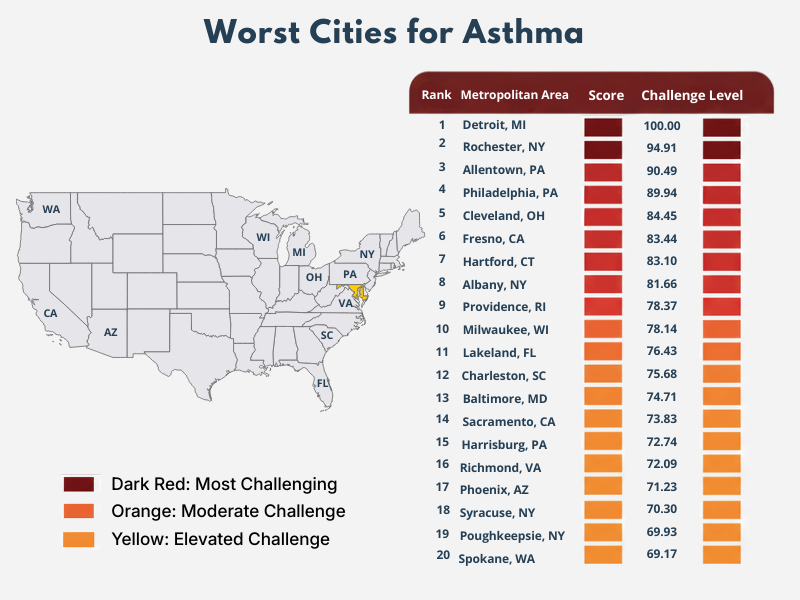
Top 20 Worst Cities for Asthma
The top 20 Asthma Capitals are determined by asthma rates, emergency room visits, and asthma-related deaths. People living in the Northeastern states experience a particularly high burden of asthma.
• 1 Detroit, MI • 2. Rochester, NY • 3. Allentown, PA • 4. Philadelphia, PA
• 5. Cleveland, OH • 6. Fresno, CA • 7. Hartford, CT • 8. Albany, NY
• 9. Providence, RI • 10. Milwaukee, WI • 11. Lakeland, FL • 12. Charleston, SC
• 13. Baltimore, MD • 14. Sacramento, CA • 15. Harrisburg, PA • 16. Richmond, VA
• 17. Phoenix, AZ • 18. Syracuse, NY• 19. Poughkeepsie, NY • 20. Spokane, WA
September: Asthma Peak Month
September is the hardest month for people with asthma, with more attacks, ER visits, and hospital stays than any other time of year. The third week, Asthma Peak Week, is usually the worst.
Several triggers overlap: ragweed pollen, mold from wet leaves and rain, back-to-school illnesses like flu and COVID-19, poor indoor air in schools, and extreme weather such as heat, humidity, and wildfire smoke.
To stay safe, AAFA recommends:
- See your doctor to review symptoms and medicines.
- Update your Asthma Action Plan, so you know what to do if symptoms worsen.
- Stay vaccinated against flu, COVID-19, RSV, and pneumococcal disease.
- Improve indoor air with ventilation, HEPA filters, and allergy-friendly products.
- Track outdoor triggers and limit exposure on high-risk days.
Planning helps families and communities reduce asthma risks and breathe easier.
Key Risk Factors That Can Worsen Asthma
These are some of the top risk factors for asthma:
• Poverty
• Lack of health insurance
• Lack of access to specialists
• Exposure to air pollution
• Pollen allergy
• Smoking (cigarettes, cigars, vapes)
• Asthma quick-relief medicine use
• Asthma control medicine use
What Role Does Inflammation Play in Asthma
To understand the role of inflammation in asthma, it is helpful to view it as a continuous biological process rather than a single event. It transforms the airways from clear, flexible tubes into narrow, hyper-sensitive channels.
Here is a descriptive look at how inflammation dictates the mechanics of asthma:
The Defensive Overreaction: Persistent Immune Activation
Inflammation in asthma begins when the immune system mistakenly identifies harmless substances like pollen, dust, or cold air as dangerous invaders. This triggers a “cascade” where white blood cells flood the airway linings.
Instead of protecting the body, these cells release chemicals (like histamines and leukotrienes) that keep the lungs in a constant state of irritation, even when you feel like you are breathing normally.
The Structural Narrowing: Internal Swelling and Edema
As the inflammatory response intensifies, the delicate tissues lining the bronchial tubes become engorged with fluid. Much like a bruise swells on your skin, the inner walls of the lungs puff outward.
Because the lungs are encased in a fixed space, this swelling can only move inward, significantly reducing the diameter of the airway and making every breath feel like it is being drawn through a thin straw.
The Clogging Effect: Hyper-Secretion of Thick Mucus
Inflammation acts as a signal for the “goblet cells” in the airway to go into overdrive. These cells produce mucus to trap irritants, but in an asthmatic lung, the production is excessive, and the fluid is unusually thick.
This leads to “mucus plugging,” where the smallest branches of the airways become physically blocked, causing the deep, productive cough often associated with an asthma flare-up.
The Invisible Trigger: Airway Hyperresponsiveness
The most dangerous role of inflammation is how it “primes” the lungs. Chronic irritation leaves the nerve endings in the airways exposed and twitchy. This means that a minor trigger that wouldn’t affect a healthy person, such as a strong perfume or a change in humidity, causes the airway muscles to panic and contract instantly.
This explains why an asthma “attack” can happen so suddenly; the inflammation has already laid the gunpowder, and the trigger just provides the spark.
The Permanent Alteration: Chronic Airway Remodeling
If the “fire” of inflammation is not extinguished with controller medications, the body eventually attempts to heal the constant irritation by laying down structural tissue. This is known as remodeling. The airway walls thicken with collagen, and the smooth muscle mass increases.
Over the years, this can lead to a permanent loss of lung function where the airways stay narrow and lose their ability to fully open, regardless of medication.
Take Control of Your Asthma – Start Today with Glow Primary Care
The Asthma Capitals Report makes one thing clear: living with asthma in the Northeast, including right here on Long Island, comes with real challenges. From intense ragweed seasons and lingering mold to urban air pollution and crowded classrooms spreading viruses, our region feels the burden, with four New York cities landing in the top 20 most challenging places to live with asthma.
But here’s the good news: where you live doesn’t have to define how well you breathe.
With the right asthma treatment strategy, a personalized plan, and proactive support, you can dramatically reduce flares, cut down on emergency visits, and enjoy life without asthma holding you back — even in a high-ranking “asthma capital” region.
At Glow Primary Care in East Northport, we’re committed to making that possible for every patient. Whether you need an updated Asthma Action Plan, same-day relief during a flare, on-site testing, preventive vaccines, or guidance on creating a healthier home environment, our team is here with the expertise and compassion you deserve.
Don’t let another year pass feeling limited by asthma. The start of 2026 is the perfect time to take charge of your respiratory health.
Contact Glow Primary Care today to discuss your asthma treatment options and breathe easier tomorrow.
Source: Asthma and Allergy Foundation of America. 2025 Asthma Capitals Report. Available at asthmacapitals.org.