

Do you feel exhausted, unmotivated, and emotionally empty? You might be experiencing burnout. Or it could be depression. The signs of burnout and depression often look the same, but they are different conditions, and confusing them can delay proper care.
At Glow Primary Care in East Northport NY, we help patients every week who aren’t sure what they’re dealing with. You don’t have to figure it out alone.
In this guide, you will learn what burnout is, the signs of extreme burnout, how burnout differs from depression, and how to recover from burnout.
What Is Burnout?
Burnout is not just feeling tired or stressed. It is a state of physical, emotional, and mental exhaustion caused by prolonged or excessive stress.
According to the World Health Organization (WHO), burnout is an “occupational phenomenon” resulting from chronic workplace stress that has not been successfully managed. It is characterized by three key components:
- Energy depletion or exhaustion
- Increased mental distance from your job
- Reduced professional efficacy
While burnout is most often linked to work, it can also come from caregiving, school, or any long-term demand that overwhelms your ability to cope.
What burnout is NOT: It is not a medical condition or a clinical diagnosis like depression. But here is the danger: chronic burnout can lead to depression if left untreated.
Common Triggers that Cause Burnout
Burnout does not happen overnight. It builds slowly over weeks, months, or even years. The causes of burnout are usually a combination of environmental factors and personal circumstances.
Here are the most common triggers:
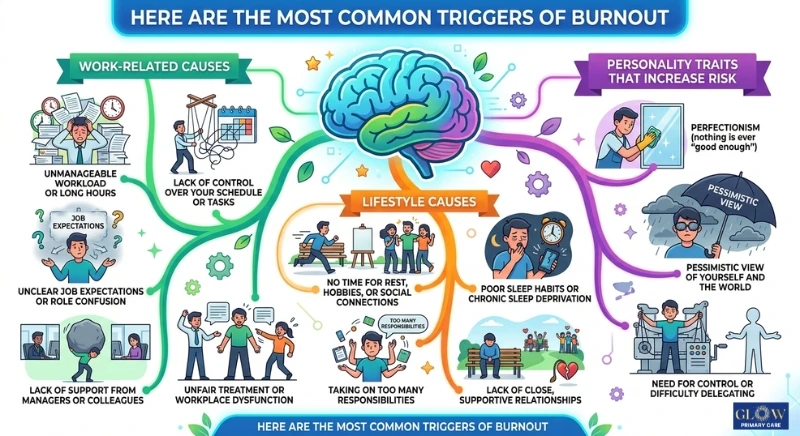
Work-related causes:
- Unmanageable workload or long hours
- Lack of control over your schedule or tasks
- Unclear job expectations or role confusion
- Lack of support from managers or colleagues
- Unfair treatment or workplace dysfunction
Lifestyle causes:
- No time for rest, hobbies, or social connections
- Poor sleep habits or chronic sleep deprivation
- Taking on too many responsibilities
- Lack of close, supportive relationships
Personality traits that increase risk:
- Perfectionism (nothing is ever “good enough”)
- Pessimistic view of yourself and the world
- Need for control or difficulty delegating
Understanding what causes burnout helps you recognize if you are at risk. But knowing the cause does not always mean you can fix it on your own, especially when the source is your job or caregiving role.
If multiple causes of burnout sound familiar, the team at Glow Primary Care can help you assess your situation and create a plan.
Burnout Symptoms You Should Not Ignore
Your body and mind send warning signals long before burnout becomes severe. Recognizing burnout symptoms early can help you take action before they worsen.
Here are the most common signs of burnout:
Physical Symptoms:
- Constant fatigue or low energy, even after sleeping
- Frequent headaches, muscle pain, or stomach issues
- Getting sick often (colds, flu, infections)
- Changes in appetite or sleep patterns
Emotional Symptoms:
- Feeling hopeless, trapped, or defeated
- Detaching from friends, family, or coworkers
- Loss of motivation or pleasure in activities
- Increased cynicism, negativity, or irritability
Behavioral Symptoms:
- Withdrawing from responsibilities or calling in sick often
- Procrastinating or taking longer to complete tasks
- Using food, drugs, or alcohol to cope
- Snapping at others over small things
Signs of extreme burnout include more severe warning signals:
- Complete emotional numbness or inability to feel anything
- Severe depersonalization (feeling disconnected from your own body)
- Inability to function at work or home for days at a time
- Thoughts of escaping, disappearing, or self-harm
If you notice signs of extreme burnout in yourself, please take them seriously. This is not a weakness; it is a signal that your nervous system is overwhelmed.
Burnout vs Depression: 5 Key Differences You Need to Know
Understanding burnout vs depression can save you months of suffering with the wrong approach. While burnout and depression share similar symptoms, they are fundamentally different. Here is how to tell them apart:
| Feature | Burnout | Depression |
| Primary cause | Chronic stress (usually work or caregiving) | Biological, genetic, psychological, or environmental factors |
| Main emotion | Exhaustion, cynicism, detachment | Sadness, hopelessness, worthlessness |
| Triggers | Specific situations (job, role, responsibilities) | Can occur without any external trigger |
| Improvement with rest | Yes, time off or vacation often helps | No, rest alone does not lift it |
| Sense of self | Still intact underneath the exhaustion | Deeply negative self-view (“I am a failure”) |
The biggest difference: If you take a two-week vacation and feel completely better, it was likely burnout. If you return feeling just as empty, it may be depression.
Can burnout turn into depression? Yes. Chronic, untreated burnout can lead to major depressive disorder. This is why early recognition matters.
Why does the distinction matter? Burnout often responds to rest, boundaries, and lifestyle changes. Depression typically requires professional treatment, therapy, medication, or all three to improve.
If you have been asking yourself, “Am I burned out or depressed?” and cannot answer confidently, that is exactly when to speak with a doctor.
If you suspect depression rather than burnout, professional help makes a difference. Depression treatment at Glow Primary Care starts with a same-day evaluation.
How to Recover From Burnout in 5 Steps
If you recognize yourself in the symptoms above, you need a plan. Burnout treatment is not about one magic solution. It is about addressing the root causes while rebuilding your energy and mental health.
Here is how to recover from burnout step by step:
Step 1: Acknowledge and pause
Stop telling yourself to push through. Burnout is not a weakness; it is a signal. Take real time off if possible. Even one day of complete rest can help.
Step 2: Identify the source
Ask yourself: What is draining me most? Is it work hours? Caregiving demands? Lack of boundaries? You cannot fix what you do not name.
Step 3: Set hard boundaries
Learn to say no. Protect your sleep. Block time for rest and hobbies. Delegate where possible. This is not selfish; it is survival.
Step 4: Rebuild daily foundations
Focus on sleep, nutrition, movement, and social connection. These sound basic because they are. Burnout erodes them first. Restoring them is medicine.
Step 5: Seek professional support
If self-help is not working after a few weeks, or if you have signs of extreme burnout, see a doctor. Primary care providers can rule out medical causes, guide your recovery, and treat any underlying depression.
How to cure burnout, honestly, there is no instant cure. But full recovery is possible with the right combination of rest, boundaries, lifestyle changes, and sometimes professional help.
6 Strategies to Deal With Burnout:
Here is how to deal with burnout day by day:
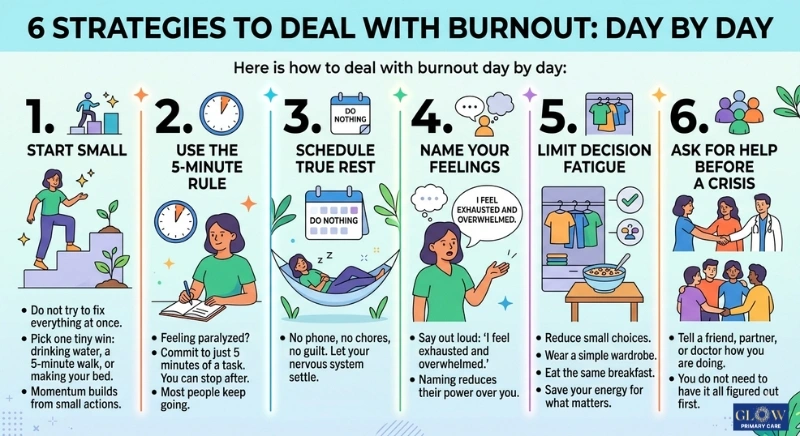
1. Start small
Do not try to fix everything at once. Pick one tiny win: drinking water, a 5-minute walk, or making your bed. Momentum builds from small actions.
2. Use the 5-minute rule
Feeling paralyzed? Commit to just 5 minutes of a task. You can stop after. Most people keep going.
3. Schedule true rest
Put “do nothing” time on your calendar. No phone, no chores, no guilt. Let your nervous system settle.
4. Name your feelings
Say out loud: “I feel exhausted and overwhelmed.” Naming reduces their power over you.
5. Limit decision fatigue
Reduce small choices. Wear a simple wardrobe. Eat the same breakfast. Save your energy for what matters.
6. Ask for help before a crisis
Tell a friend, partner, or doctor how you are doing. You do not need to have it all figured out first.
When to See a Doctor for Burnout or Depression in East Northport
You have tried rest, boundaries, and daily coping strategies, but you still feel exhausted, empty, or stuck. If rest no longer recharges you, or you feel hopeless most days, self-help is no longer enough. Thoughts of death, using alcohol to cope, or being unable to function for days mean you should not wait.
At Glow Primary Care in East Northport, board-certified doctors evaluate your symptoms, rule out medical causes, and treat both burnout and depression, including medication management if needed. You do not need a psychiatrist to start
If you live in or near East Northport, NY, help is closer than you think. Glow Primary Care offers same-day appointments with board-certified doctors who listen. No judgment. No weeks-long wait. Just real, compassionate care.