
We’ve all heard a story that begins with: “They went to bed peacefully and never woke up.”It sounds serene, but for families left behind, it raises a troubling question: how can someone die in their sleep without warning?
The truth is, sleep isn’t the enemy. What’s dangerous are the underlying medical conditions that quietly take over when the body is at rest.
Understanding the real causes can help you prevent them and sleep more peacefully knowing you’re safe.
The Quiet Mystery: Why Do People Die in Their Sleep?
Each night, your body performs a delicate balancing act:
- Heart rate slows
- Breathing steadies
- The brain enters recovery mode
This process restores energy and keeps you healthy. But for some people, a hidden health issue silently disrupts this balance, causing a sudden and tragic event.
Common Hidden Causes
Heart Attack (Myocardial Infarction):
During sleep, a sudden blockage in blood flow can stop the heart, especially in people with heart disease, high cholesterol, or untreated high blood pressure.
Sudden Cardiac Arrest (SCA):
The heart’s rhythm becomes chaotic, stopping blood circulation. It can happen with no prior symptoms.
Stroke:
A clot or rupture in brain vessels can occur silently at night, cutting off oxygen to vital areas of the brain.
Sleep Apnea:
A condition where breathing stops repeatedly during sleep, leading to oxygen deprivation. Over time, it strains the heart and brain.
Chronic Conditions:
Diabetes, obesity, and hypertension increase the risk of nighttime medical events due to stress on the cardiovascular system.
The Hidden Triggers While You Sleep
Even during rest, your body’s internal systems are active. For people with silent health risks, several nighttime triggers can become dangerous:
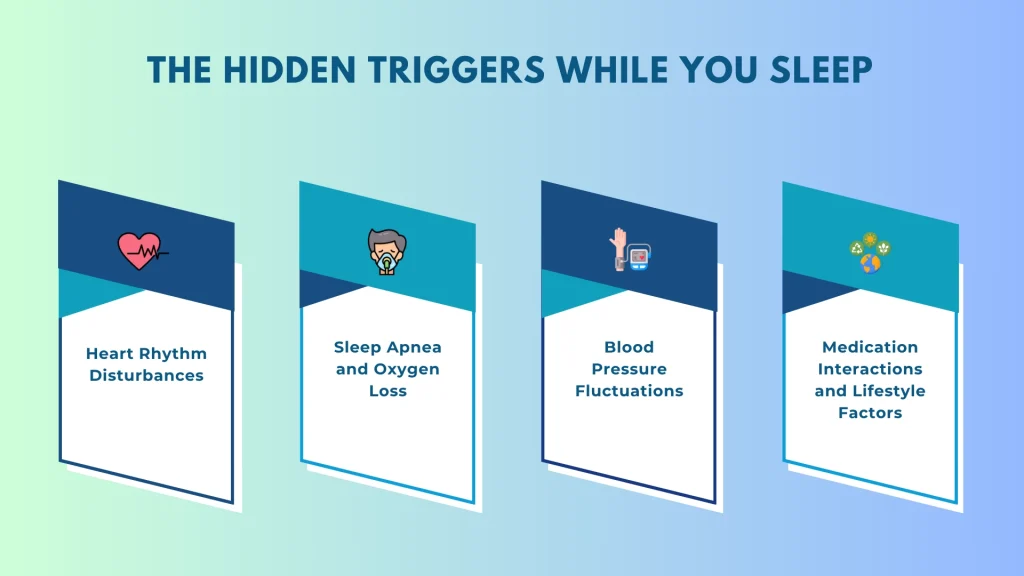
Heart Rhythm Disturbances
The heart’s electrical signals can occasionally misfire during deep sleep, especially in those with undiagnosed heart disease, uncontrolled blood pressure, or low potassium/magnesium levels.
Sleep Apnea and Oxygen Loss
Each pause in breathing during sleep apnea reduces oxygen and forces the heart to work harder. Severe cases can cause dozens of oxygen drops per hour, significantly stressing the cardiovascular system.
Blood Pressure Fluctuations
Normally, blood pressure “dips” at night. If it doesn’t, a condition called non-dipping hypertension risk for heart attack and stroke rises (European Society of Hypertension, 2024).
Medication Interactions and Lifestyle Factors
Mixing sedatives, alcohol, or pain medications can dangerously slow breathing. Even heavy late-night meals, smoking, or stress can overwork your heart while you sleep.
Did you know? Treating sleep apnea with CPAP or other therapies can lower your risk of nighttime cardiac arrest by up to 50%.
Can You Really Die in Your Sleep? Doctors Explain
Yes, but it’s rare, and almost always preventable.
What Actually Happens
When death occurs during sleep, a major system suddenly fails:
- The heart may stop beating (cardiac arrest).
- The brain may be deprived of oxygen (stroke or apnea).
- Or an existing illness like diabetes or severe hypertension may quietly trigger a fatal event.
In nearly all cases, these individuals lived with undiagnosed or uncontrolled conditions for years
Who Is at Higher Risk?
Certain groups are more vulnerable to medical emergencies during sleep:
- People with high blood pressure or heart disease
- Those who snore heavily or have untreated sleep apnea
- Smokers, obese individuals, or heavy drinkers
- People under high stress or with poor sleep patterns
- Adults over 50 with limited physical activity or irregular medical checkups
Only about 10–15% of sudden cardiac deaths occur during sleep; most are preventable with proactive care (AHA, 2024).
When the Heart Stops While You Dream
Sleep is meant for recovery, but for some, it’s when the heart faces its toughest test.
Nocturnal Heart Attacks
A heart attack during sleep occurs when blood flow to the heart muscle is blocked.
- May go unnoticed because pain signals are dulled during deep sleep
- Triggered by plaque buildup or blood clots
- Warning signs like night sweats or shortness of breath before bed are often missed
Sudden Cardiac Arrest
Triggered by an electrical failure of the heart. This can happen in conditions like ventricular tachycardia, Brugada syndrome, or severe heart muscle damage.
The Role of REM Sleep
During REM (dream) sleep, heart rate and adrenaline levels increase slightly. In people with unstable arteries, this can rarely trigger a cardiac event.
What Really Happens When You Die in Your Sleep?
When the body shuts down during sleep, one of three systems typically fails:
- Cardiac failure (heart stops)
- Respiratory failure (breathing ceases)
- Neurological failure (the brain stops signaling vital functions)
Because the body is in a calm state, these events often appear peaceful. However, some cases involve short periods of distress, like gasping or chest tightness, that occur before consciousness is lost.
Why It Feels Peaceful but Isn’t Always
Many people imagine dying in sleep as painless, and often, it is. The body simply shuts down as systems fail one by one.
However, in some cases (such as with sleep apnea or cardiac arrest), the person may briefly experience oxygen loss, chest tightness, or shortness of breath, though they may not wake up to feel it.
The Science Behind “Peaceful Death”
Researchers believe the brain may release calming hormones (like endorphins) during severe oxygen shortage, a natural defense mechanism that eases distress. This could explain why many people appear calm even in their final moments of sleep.
Is Dying in Your Sleep Peaceful or a Silent Struggle?
The phrase “passed peacefully in their sleep” is partly true.
Often, the body simply shuts down quietly. But in others, especially with sleep apnea or heart failure, the body struggles for oxygen before stopping.
When it’s peaceful:
- Oxygen drops slowly
- The person drifts deeper into unconsciousness
When it’s not:
- Breathing may stop and restart
- The person may gasp or shift in discomfort
- The heart may briefly race before stopping
The hopeful truth: Most of these outcomes can be completely prevented through early detection, lifestyle care, and proper treatment.
The Wake-Up Call: How to Protect Yourself
The key to preventing sudden death during sleep is awareness, screening, and consistent care.
Recognize the Warning Signs
Seek medical advice if you experience:
- Loud or chronic snoring, gasping during sleep
- Morning headaches or fatigue despite full sleep
- Chest tightness, shortness of breath, or swelling in the legs
- Dizziness, palpitations, or irregular heartbeat
These are not normal signs of aging; they may be early warnings of cardiovascular or respiratory disease.
Evidence-Based Prevention
- Control blood pressure, sugar, and cholesterol regularly
- Get screened for sleep apnea if you snore or feel unrefreshed
- Stay active and maintain a healthy weight
- Avoid alcohol and sedatives before bed
- Follow AHA’s Life’s Essential 8: eat healthy, stay active, avoid nicotine, and get quality sleep
Sleep Isn’t the Enemy Ignorance Is
Most people don’t die because of sleep itself, but because of undiagnosed or poorly managed health conditions. The reassuring truth is that with regular medical checkups, healthy habits, and proper treatment, the risks can be dramatically reduced.
At Glow Primary Care, we believe that peaceful sleep begins with proactive care because the more you understand your health, the safer your nights (and days) will be.