


Waking up on a warm morning, skipping breakfast, and diving into a busy day can take a toll on your body. By noon, chest tightness or pressure may strike, making your heart race and triggering fear of a heart attack.
In many cases, dehydration is the hidden culprit. When your body lacks fluids, your heart works harder, and your chest muscles may tense, creating a sensation similar to cardiac pain.
Understanding this connection helps you stay calm and know when to seek medical attention.
Why Dehydration Can Mimic Heart-Related Chest Pain
Chest pain is one of the body’s most alarming signals. But not all chest discomfort comes from the heart itself. Sometimes, the root cause is much simpler: your body doesn’t have enough fluid to function smoothly.
When you’re dehydrated, a few key things happen inside your body that can create sensations similar to heart pain.

Your blood volume drops
Water makes up more than half of your blood, and when you lose too much fluid from sweat, heat, or caffeine, your blood volume drops.
As a result, your heart must pump harder to circulate oxygen, causing chest pressure or tightness that can feel like cardiac pain, even though it’s usually harmless in healthy people.
Electrolyte imbalance triggers muscle spasms
Dehydration isn’t just about losing water; it also means losing electrolytes like sodium, potassium, and magnesium.
These minerals help chest muscles contract and relax smoothly, and when levels drop, muscle spasms or cramps can occur, causing sharp or pinching pains that seem to come from deep within the chest.
The heart speeds up to compensate
As your blood volume drops, your heart rate rises to keep oxygen flowing. This can cause fluttering, tightness, and even breathlessness.
In some cases, dehydration can cause chest pain and shortness of breath, especially when your heart is pumping harder than usual.
Anxiety makes it worse
Feeling chest pain, even if minor, can trigger panic. That anxiety leads to shallow breathing and muscle tension, which amplify discomfort. It becomes a cycle: dehydration causes chest tightness → panic increases tension → the pain worsens.
Without understanding this connection, people often mistake a fixable issue for an emergency.
Real-Life Misdiagnoses — When Dehydration Feels Like a Heart Attack
Every year, thousands of people rush to emergency rooms after feeling sudden chest pain. Many are anxious, pale, and convinced they’re having a heart attack. Yet, after an ECG and blood-enzyme test, their results come back normal.
The diagnosis? Dehydration or electrolyte imbalance.
The Everyday Panic
You don’t need to be running a marathon to become dehydrated.
Here are the kinds of moments that often lead to confusion:
- The Office Worker: Sits through hours of meetings with three cups of coffee but no water. By late afternoon, a dull chest pressure sets in.
- The Weekend Gardener: Spends an hour under the sun trimming plants, feels light-headed and tight-chested, and calls an ambulance out of fear.
- The Parent on the Go: Rushes between errands, skipping meals and fluids, then suddenly feels her chest “flutter.”
Each situation triggers an understandable alarm the symptoms overlap with early cardiac distress.
What Doctors Often Find
In emergency departments, such patients often have:
- Normal ECG readings
- Normal troponin (heart-damage marker) levels
- Elevated heart rate and signs of mild dehydration (dry mouth, dark urine, low blood pressure)
After intravenous fluids or oral rehydration, their chest discomfort fades within an hour. Clinicians sometimes call it “dehydration mimicry” when a benign physiological change produces symptoms that feel life-threatening.
Why This Happens So Often
Two main reasons:
- Fear amplification. Chest pain automatically triggers anxiety, which worsens tightness and breathing patterns.
- Lifestyle dehydration. Most people spend the day with slightly dehydrated coffee, air-conditioning, long work hours, or skipping meals, priming the body for overreaction.
The Lesson in Every Case
The real danger isn’t dehydration alone; it’s not knowing the difference between dehydration and true cardiac distress.
Recognizing patterns (heat, caffeine, exertion, skipped water) can save unnecessary panic, ER visits, and cost while still keeping you alert to genuine emergencies.
Dehydration vs Heart Attack – How to Tell the Difference
Chest pain is scary because symptoms overlap. But the pattern and relief response are key clues.
What Dehydration Feels Like
- Gradual onset after heat, exertion, or caffeine.
- Feels like tightness, cramping, or mild left side chest pain.
- Often fades after fluids, rest, and deep breathing.
Some people even notice left side chest pain from dehydration, caused by minor chest muscle spasms, another reason it’s often mistaken for a cardiac symptom.
What a Heart Attack Feels Like
- Sudden, crushing, or squeezing pain in the chest center or left side.
- It may radiate to the arm, jaw, or neck.
- Accompanied by nausea, cold sweat, or shortness of breath.
At-a-Glance Comparison Table
| Feature | Dehydration | Heart Attack |
| Onset | Gradually, after heat/exertion | Suddenly, it can occur at rest |
| Pain type | Dull, tight, or cramp-like | Heavy, squeezing, crushing |
| Relief factors | Improves with fluids and rest | Persists or worsens |
| Other signs | Thirst, dry mouth, fatigue | Sweating, nausea, radiation |
| Heart rate | Fast but steady | Irregular or weak |
| Duration | 10 – 60 minutes, resolves | Often > 15 min, ongoing |
| When to act | Rehydrate & observe | Call 911 immediately |
The Gray Area: When to Play It Safe
Because the two can overlap, experts recommend a simple rule:
If you’re unsure, seek medical attention.
Even if it turns out to be dehydration, prompt evaluation ensures no underlying heart issue is missed. Think of hydration as the first step, not a replacement for professional care.
Quick Self-Check Flowchart – Should You Call 911 or Rehydrate First?
When chest pain strikes, seconds feel like hours. Having a simple mental checklist can help you stay calm and act wisely. Think of this as your two-minute self-check, not a substitute for medical care, but a way to decide what to do right now.
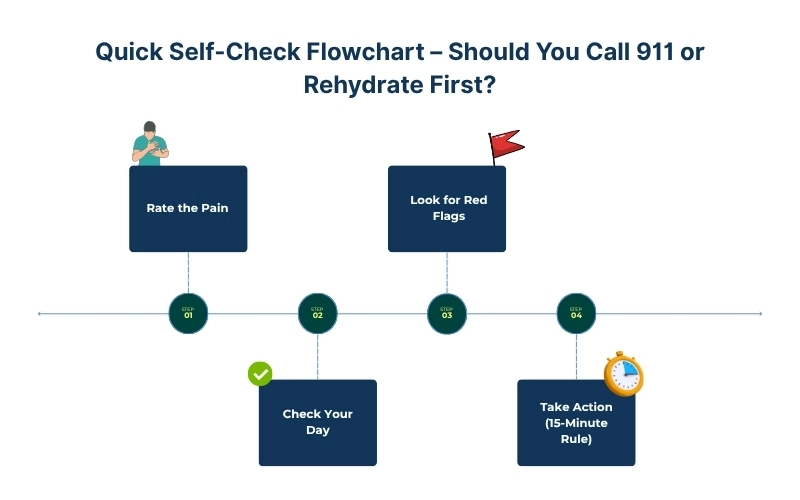
Step 1 – Rate the Pain
- Severe, crushing, or spreading to your arm, neck, or jaw?
→ Call 911 immediately. - Mild to moderate, feels like pressure or tightness that came on gradually?
→ Go to Step 2.
Step 2 – Look for Red Flags
If you have any of these symptoms, skip straight to emergency care:
- Pain lasting more than 10 minutes without relief
- Shortness of breath or sweating
- Nausea or faintness
- Pain after minimal activity or while resting
- Known heart disease, diabetes, or high blood pressure
If none apply, continue.
Step 3 – Check Your Day
Ask yourself:
- Have I had enough water today?
- Have I been in the heat or sun for more than 30 minutes?
- Have I had multiple coffees, sodas, or alcohol but little water?
- Did I skip meals or feel light-headed?
If you said yes to two or more, dehydration could be the culprit.
Step 4 – Take Action (15-Minute Rule)
- Sit down, loosen tight clothing, and take slow, deep breaths.
- Drink 1–2 cups of water or an electrolyte beverage slowly.
- Rest for 15 minutes
If the pain fades or disappears, dehydration was likely the cause. If it persists, worsens, or returns, get medical help right away.
How to Rehydrate Safely When You Suspect Dehydration
If your chest feels tight and you suspect dehydration might be playing a role, how you rehydrate matters.
Simply guzzling a liter of water isn’t always the right move; the goal is steady fluid restoration that supports both your heart and your electrolytes.
Start Slow and Steady
When you’re thirsty and anxious, it’s tempting to drink too much too fast. But large volumes of water all at once can cause bloating, nausea, or even a dangerous drop in sodium levels (called hyponatremia).
Better approach:
Sip ½–1 cup (120–240 ml) every 10–15 minutes. Within an hour, you’ll usually notice lighter breathing, steadier heartbeat, and relief from tightness.
Replace Lost Electrolytes
Water alone may not be enough; your body also needs minerals that help your muscles and nerves work properly.
Good options:
- Oral rehydration packets or electrolyte mixes (unsweetened if possible).
Coconut water or mineral water. - A pinch of salt and a squeeze of lemon in plain water for a quick DIY fix.
Avoid sugary sodas and energy drinks; they worsen dehydration.
Pair Fluids With Food
Rehydration is faster when combined with foods rich in both water and electrolytes.
Try:
Cucumber, watermelon, oranges, berries
Baked potatoes or soups (for potassium + sodium)
Leafy greens and yogurt
Eating while hydrating helps stabilize blood sugar and reduces dizziness.
Rest and Breathe
Sit upright or recline slightly, don’t lie completely flat. Take slow, deep breaths in through your nose and out through your mouth. This supports circulation, eases chest wall tension, and helps your heart return to its normal rhythm.
When to Seek Medical Evaluation
Even if hydration helps, get checked if:
- Chest pain persists longer than 30–60 minutes.
- Pain returns frequently despite good hydration.
- You have existing heart disease, diabetes, or high blood pressure.
Preventing Dehydration-Related Chest Pain Long-Term
Staying hydrated isn’t just about avoiding thirst; it’s about keeping your heart, muscles, and circulation balanced every day. By understanding how dehydration creeps up slowly, you can prevent those unsettling chest sensations before they start.
Build a Daily Hydration Routine
Hydration works best when it’s a habit, not an afterthought. Follow this simple rhythm throughout your day:
| Time | Habit | Why it helps |
| Morning | Drink 1 glass of water before coffee | Replenishes fluids lost overnight |
| Mid-morning | Sip water or herbal tea | Keeps circulation steady while working |
| Lunch | Add water-rich foods (soups, fruit, greens) | Boosts hydration through food |
| Afternoon | Refill your bottle before fatigue hits | Prevents caffeine-driven dehydration |
| Evening | Moderate water intake, especially after exercise | Maintains balance before bedtime |
Tip: Use a 20-oz (600-ml) reusable bottle. If you finish three by dinner, you’ve hit an average adult’s daily goal.
Match Fluids to Your Lifestyle
Your hydration needs change based on weather, activity, and health.
- Hot or humid climate: Increase intake by 25–50%.
- Exercise or physical labor: Replace 1–2 cups of water for every 30 minutes of sweating.
- Air-conditioned or heated spaces: Drink more than you think. Dry air accelerates water loss.
- If you fast (e.g., Ramadan or intermittent fasting): Focus on electrolyte-rich meals during non-fasting hours.
Rethink Hidden Dehydrators
Some everyday habits quietly dry you out:
- Caffeine & alcohol: Both act as mild diuretics.
- High-salt foods: Pull water from cells to balance sodium.
- Skipping meals: Less food means less water intake.
You don’t have to quit coffee or an occasional drink, just balance one dehydrating drink with one glass of water.
Keep an Eye on Your Body’s Signals
Your body gives early warnings long before chest discomfort appears:
- Dry mouth or cracked lips
- Dark urine (amber or honey-colored)
- Headache or fatigue
- Faster heartbeat or dizziness
When you notice these, it’s your cue to pause and rehydrate before your body has to shout through chest pain.
Medications & Medical Conditions to Watch
Some prescriptions, like diuretics, blood pressure meds, or antihistamines, can increase fluid loss. Older adults, people with diabetes, and those on multiple medications should consult their primary care provider about customized hydration needs.
Preventive mindset: Small, consistent hydration habits protect your heart far better than any quick fix after symptoms appear.
Conclusion
Not all chest pain signals a heart attack; sometimes, it’s your body’s way of saying you’re dehydrated. Rest, hydrate, and watch if the discomfort eases within minutes.If chest tightness or fatigue keeps returning, it’s best to get checked. Visit our chest pain evaluation page to learn how Glow Primary Care can help you identify the cause and protect your heart health.