

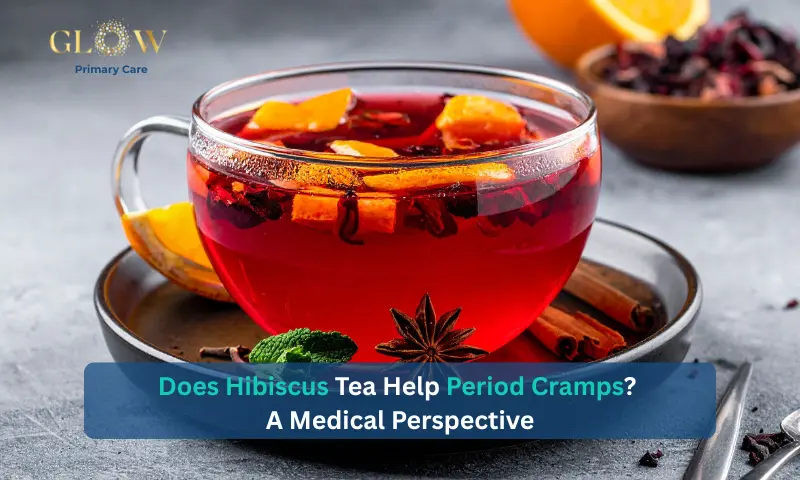
Managing period cramps (dysmenorrhea) and hormonal bloating can feel like an uphill battle every month. While many reach for over-the-counter painkillers, Hibiscus tea is emerging as a potent, science-backed natural alternative for menstrual relief.
At Glow Primary Care, we combine holistic wellness with clinical expertise to help women navigate their cycles comfortably. In this guide, we’ll break down how hibiscus tea targets uterine pain, its impact on estrogen, and the safety steps you should take before adding it to your routine.
Does Hibiscus Tea Help with Period Cramps?
The answer lies in the tea’s ability to influence the chemical triggers of pain.
1. Prostaglandin Inhibition
During your period, your body releases chemicals called prostaglandins.
- These chemicals cause the uterine muscles to contract.
- Higher prostaglandin levels = more severe cramps.
- Studies (including research in the Journal of Ethnopharmacology suggest hibiscus extracts can inhibit these inflammatory compounds.
Think of it as a mild, natural version of Ibuprofen.
2. Antispasmodic Action
Cramps are essentially muscle spasms. Hibiscus tea acts as a natural antispasmodic. It helps relax the smooth muscle tissue of the uterus. When these muscles relax, the intensity decreases, leading to a significant reduction in sharp pelvic pain.
3. Improving Blood Flow
Severe cramping can sometimes be exacerbated by poor circulation. Hibiscus is known as a mild vasodilator. Better blood flow to reproductive organs = less of that “stagnant” heavy feeling on days 1-2 of your cycle.
Will Hibiscus Tea Make Your Period Heavier or Shorter?
This is one of the most common concerns we hear from patients.
Here is the direct answer: For most women, hibiscus tea does not significantly increase bleeding volume. However, hibiscus is an emmenagogue (a substance that stimulates blood flow to the pelvic area).
- It may increase the speed or consistency of your flow – but not the total amount of blood lost. No clinical studies show that hibiscus causes heavier bleeding (menorrhagia).
- Some traditional sources suggest hibiscus may slightly shorten period length. It helps the uterus shed its lining more efficiently, but this effect is mild and varies by person.
- What you might notice: A slightly faster flow on day 1-2 (more frequent pad changes), but not an increase in total days of bleeding.
Key takeaway: Hibiscus tea is safe for normal menstrual flow. If you notice a dramatic change in bleeding, stop and consult your provider.
Hibiscus Tea Benefits for Women
While cramps are the most discussed symptom, the menstrual cycle affects the entire body. Hibiscus tea offers a multi-targeted approach to the broader symptoms of PMS.
Fighting “Hormonal Bloating”
Water retention during the luteal phase is caused by fluctuating progesterone and estrogen levels. Hibiscus tea acts as a natural diuretic, helping your kidneys release excess sodium and water without depleting essential electrolytes.
The Vitamin C and Iron Connection
Heavy periods deplete iron, causing fatigue and brain fog. Hibiscus tea isn’t high in iron, but it is rich in Vitamin C, which enhances iron absorption. Drink it alongside iron-rich foods or supplements to help your body utilize iron more effectively.
Does Hibiscus Tea Lower Estrogen?
While hibiscus tea is beneficial, it is pharmacologically active, meaning it can interact with your hormones.
Phytoestrogens and Menstrual Induction
Hibiscus is considered an emmenagogue, a substance that stimulates or increases menstrual flow. It contains phytoestrogens that can “mimic” estrogen in the body. For some, this helps in regulating an irregular cycle; however, for others, it may interfere with the body’s natural hormonal delicate balance.
Hibiscus and Estrogen Levels
⚠️ Women on Birth Control
- Space tea 2-3 hours apart from your pill, or avoid
- Theoretical risk of interference with hormonal contraceptives
⚠️ Fertility & Pregnancy
- Hibiscus stimulates uterine blood flow
- Avoid concentrated hibiscus tea if pregnant or undergoing fertility treatments
Key Takeaway: Moderate use (1-2 cups during your period) is unlikely to cause problems for most healthy women. But if you are on birth control, trying to conceive, or have a hormone-sensitive condition – talk to your doctor first.
The Importance of Medical Supervision
Because hibiscus can influence the endocrine system, it should be treated with respect. If you have a history of hormonal imbalances, such as PCOS or estrogen dominance, it is essential to discuss your herbal intake with a healthcare provider. This ensures that your “natural remedy” isn’t working against your long-term hormonal health goals.
How to Brew & The Pre-Period Protocol
To truly experience the benefits of hibiscus tea for period relief, consistency and timing are key. You cannot simply drink one cup when the pain is at its peak and expect instant results; you must prepare your body in advance.
The “Pre-Period Protocol”
Since hibiscus works by inhibiting the buildup of inflammatory prostaglandins, you should start drinking the tea 2 to 3 days before your expected period start date.
- Dosage: 1 to 2 cups per day is generally sufficient for most women to see a reduction in pre-period bloating and the intensity of day-one cramps.
- Consistency: Continue drinking the tea through the first two days of your cycle, which are typically the most painful.
The Correct Way to Brew
To extract the maximum amount of polyphenols and antioxidants, follow this method:
- Source High-Quality Petals: Use organic, dried Hibiscus sabdariffa petals or high-quality tea bags.
- Temperature: Use boiling water ($100°C$ or 212°F).
- Steep Time: Let the tea steep for at least 5 to 8 minutes. The water should turn a deep, opaque ruby-red.
- Avoid the “Sugar Trap”: Refined sugar is pro-inflammatory and can actually worsen cramps. If you find the tea too tart, sweeten it with a small amount of raw honey or Stevia.
The “Glow” Anti-Inflammatory Blend
For enhanced relief, try adding a slice of fresh Ginger and a stick of Cinnamon to your brew. Ginger acts as a secondary muscle relaxant, while cinnamon helps regulate blood flow, creating a powerful triple-threat against menstrual pain.
Does Hibiscus Tea Increase or Decrease Estrogen?
This is a confusing topic because hibiscus seems to do both, depending on how you look at it. Here is the clear breakdown.
| Question | Answer |
| Does it increase estrogen? | No, not directly. But it contains phytoestrogens (plant compounds that mimic estrogen in the body). |
| Does it decrease estrogen? | Yes, potentially – at high doses, research suggests hibiscus may lower actual circulating estrogen levels. |
Why People Think It Increases Estrogen
Hibiscus contains phytoestrogens – natural plant compounds that have a similar chemical structure to human estrogen. When you drink hibiscus tea, these phytoestrogens can bind to estrogen receptors in your body and produce weak estrogen-like effects.
This is why some sources say hibiscus “increases estrogen” – they are referring to estrogenic activity, not actual estrogen levels.
Why Research Suggests It May Decrease Estrogen
Several studies (including those in the Journal of Ethnopharmacology) show that high doses of hibiscus extract may lower circulating estrogen over time.
The proposed mechanism: hibiscus may affect aromatase (the enzyme that produces estrogen), leading to reduced synthesis.
What This Means for You
| If you have… | What to know |
| Normal cycles | Moderate consumption (1-2 cups/day during your period) is unlikely to significantly change your estrogen levels. |
| Estrogen dominance | Hibiscus might be helpful (if it lowers estrogen), but consult your doctor first – this is not a proven treatment. |
| Low estrogen symptoms (hot flashes, vaginal dryness) | Use caution. Hibiscus could theoretically worsen low estrogen. |
| PCOS | Talk to your provider. Some PCOS patients have high estrogen, some have low; hibiscus affects each differently. |
| On birth control pills | There is a theoretical risk that hibiscus could interfere. We recommend spacing hibiscus tea at least 2-3 hours apart from your pill, or avoiding it altogether. |
The Bottom Line on Estrogen
Hibiscus tea contains phytoestrogens (mimics estrogen), but high doses may lower actual estrogen levels. For moderate, occasional use (1-2 cups during your period), significant hormonal changes are unlikely for most healthy women.
Understanding Hibiscus Tea Side Effects
While hibiscus is a natural botanical, it is a potent herb that can interact with various systems:
- Blood Pressure: It can lower blood pressure. If you have hypotension, monitor for dizziness.
- Acetaminophen (Tylenol) Interactions: Some studies suggest hibiscus may make your body process Tylenol faster, potentially making your pain medication less effective. Space them out by 2–3 hours.
- Blood Sugar: It may lower blood sugar; diabetics should use caution.
When to See a Specialist
Relying solely on herbal remedies for chronic pain can mask underlying conditions. “If your period pain is interfering with your quality of life, it may be time to move beyond the tea kettle and schedule an appointment at Glow Primary Care in East Northport, NY, for Women’s Health Services.
Recognizing the Signs of a Larger Issue
Hibiscus tea helps with standard cramping, but it cannot treat structural or hormonal disorders. Schedule an appointment at Glow Primary Care if you experience:
- Debilitating Pain: Cramps unrelieved by medication or natural remedies that prevent work or school.
- Menorrhagia (Heavy Bleeding): Soaking a pad or tampon every hour for several hours.
- Irregular Cycles: Periods more frequent than every 21 days or less often than every 35 days.
- Pelvic Pain Between Periods: Persistent discomfort outside your menstrual window.
Conclusion:
There is no one-size-fits-all solution for period pain. Hibiscus tea is a scientifically-backed natural ally against inflammation, muscle spasms, and bloating. Using the “Pre-Period Protocol” helps you take proactive control of your cycle.
But herbal remedies are just one piece of the puzzle. True wellness requires understanding your unique hormonal landscape. A cup of tea can soothe a cramp, but a comprehensive health plan can transform your life.
Take the Next Step with Glow Primary Care
Don’t let menstrual discomfort dictate your schedule or dampen your quality of life. At Glow Primary Care, we are dedicated to providing women with compassionate, expert-led healthcare. Whether you are seeking holistic advice or need a clinical diagnosis for persistent pain, our team is here to support you.
Ready to find lasting relief? Schedule your Women’s Health Consultation at Glow Primary Care today. Let us help you move beyond temporary fixes and toward a healthier, more balanced cycle.
Medical Disclaimer
The information provided in this article is for educational purposes only and is not intended as medical advice. Always consult with a qualified healthcare provider before starting any new herbal supplement, especially if you are pregnant, nursing, taking medication, or have an underlying medical condition.