

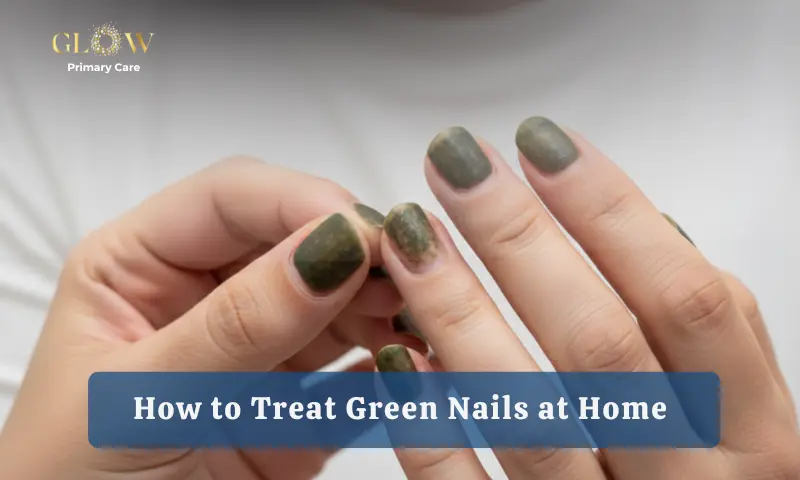
If you’ve noticed a green discoloration under your nail, whether you wear press-on nails, acrylics, or none at all, you’re dealing with what’s commonly called “greenies.” The sight can be alarming, but the good news is that most cases are treatable at home with the right approach.
This guide combines clinical expertise with practical nail care advice. We’ll cover exactly what’s causing your green nail, how to treat it step by step, and how to prevent it from ever coming back.
What causes the green color?
The green pigment comes from pyocyanin, a compound produced by the bacteria Pseudomonas aeruginosa. It’s not dangerous in most cases, but it does signal that bacteria have found a warm, moist space between your nail and nail bed to colonize.
What Causes Green Nails?
Green nail discoloration typically points to one of three root causes. Understanding which one you have determines the right treatment path
Three Main Causes of Green Nails
| Cause | Characteristics | Development Speed | Common In |
| Bacterial Infection | Appears suddenly, bright green color | Fast (1-2 weeks) | Healthcare workers, swimmers |
| Fungal Infection | Develops gradually, brown-yellow initially | Slow (4-6 weeks) | Damp environments, nail salons |
| Nail Damage | Green spot under nail from trauma | Varies | Manual workers, active individuals |
Press-on & Acrylic Nail Wearers: Read This
Artificial nails are a leading trigger for bacterial green nails. Lifting, poor adhesion, or improper removal creates micro-gaps where moisture and bacteria thrive. If you see green after wearing press-ons, it’s almost certainly Pseudomonas aeruginosa, and you should remove the nail immediately before beginning treatment
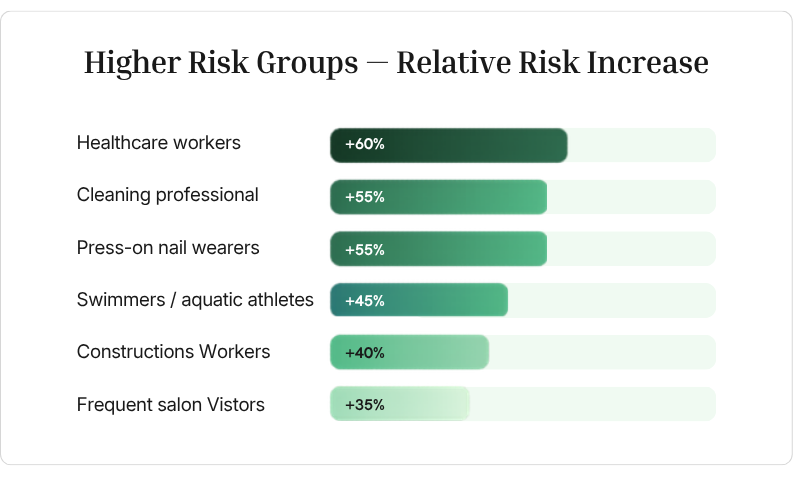
Who Is Most at Risk?
Prolonged water exposure, artificial nails, and certain occupations significantly raise your chances of developing green nail syndrome.
The Importance of Early Detection
Catching green nails early is absolutely key. Once discoloration appears, several months pass before the nail fully grows out. Prevention and early intervention are equally important.
✅ Watch for these signs:
- Small green discoloration on nail edge
- Nail separating slightly from the nail bed
- Unusual odor around the nail area
- Slight swelling around the nail cuticle
- Changes in nail texture or thickness
Don’t ignore lifting nails
If your press-on or natural nail is lifting at the edges, don’t press it back down or reapply the artificial nail over it. That traps bacteria and dramatically worsens the infection. Remove it and start treatment immediately.
How to Get Rid of Green Nail Fungus and Treat Green Nails at Home
Effective treatment requires consistency over several weeks. There’s no overnight fix; the discolored nail must grow out while you clear the underlying infection. Follow these steps in order.
1 Remove artificial nails immediately
If you wear press-ons, acrylics, or gel nails, remove them before anything else. Leaving them on seals in moisture and bacteria, making the infection significantly worse. Soak in warm water to loosen rather than prying, to avoid additional nail bed trauma.
💅 Press-on wearers: This is step zero. Do not skip this.
2 Keep nails completely dry
Moisture is the bacteria’s lifeline. After every handwash or water exposure, pat nails dry with a clean towel and allow 2–3 minutes of air drying. Pay close attention to the gap between nail and skin. If your work requires frequent water contact, wear latex gloves, but ensure your hands are completely dry before putting the gloves on.
🧤 Replace gloves if damp inside; trapped moisture worsens infection
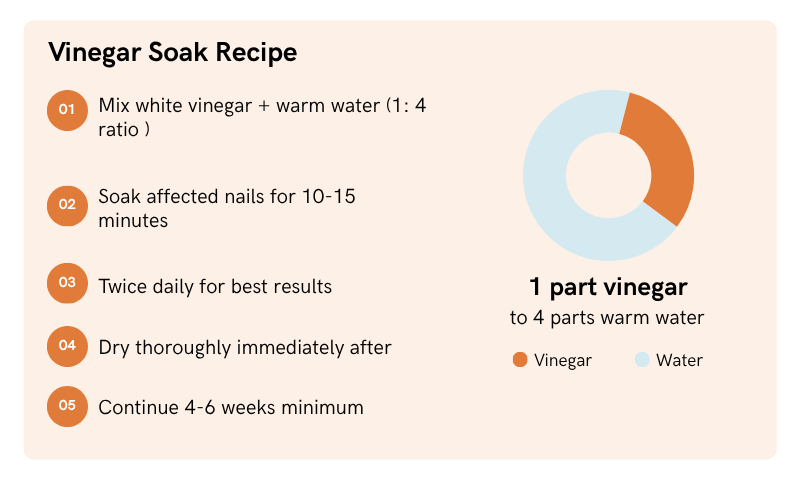
3 Vinegar soaks (daily)
Vinegar’s mild acidity creates an environment hostile to bacterial and fungal growth. For best results, use a slightly diluted solution rather than full strength, which can irritate surrounding skin.
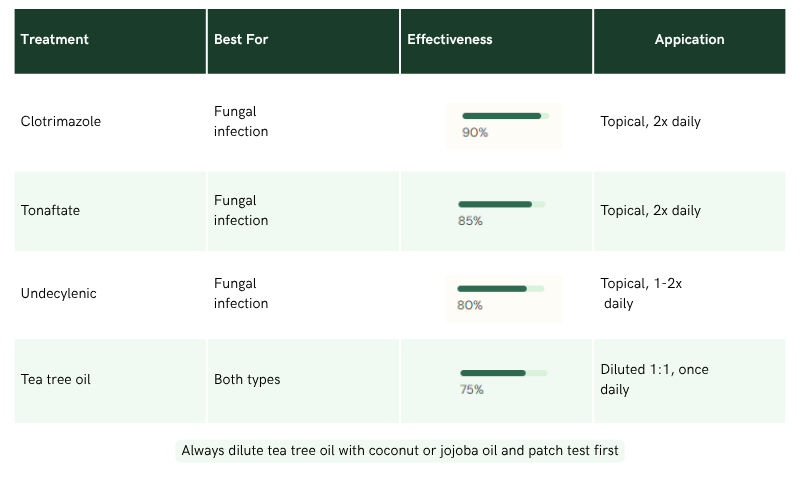
Apply antifungal or antibacterial solutions
Topical treatments accelerate recovery alongside vinegar soaks. Choose based on your infection type: bacterial (more likely with press-ons) or fungal (more likely in humid environments).
Maintain nail hygiene throughout
Trim nails short (every 7–10 days) to remove infected portions as they grow out. File in one direction only, never saw back and forth. Disinfect all nail tools with rubbing alcohol after every use to avoid reinfection.
💡 Don’t try to reattach a separated nail
If your nail has lifted from the nail bed, let it grow out naturally. Forcing it back creates the exact moist gap bacteria love most.
Your Recovery Timeline
Patience is essential. Here’s a realistic week-by-week roadmap so you know exactly what to expect:
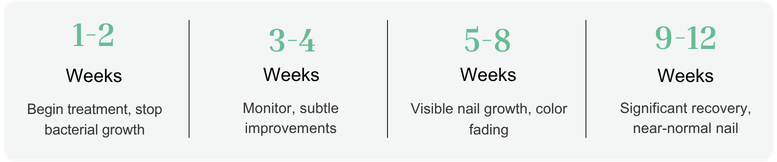
Week 1–2
Start all treatments simultaneously
Remove artificial nails. Begin drying routine, vinegar soaks twice daily, and apply your chosen topical solution. Don’t expect visible change yet; you’re stopping the spread.
Week 3–4
Assess and adjust
Check for any spread of discoloration. If the green area is stable or reducing in size, treatment is working. If it’s expanding, add an over-the-counter antifungal to your routine.
Week 5–8
Noticeable improvement
New nail growth should appear healthy at the base. The green-stained nail continues growing out. Maintain all hygiene practices consistently; this is the phase most people give up too early.
Week 9–12
Near-complete recovery
The discolored portion should be mostly grown out. Continue preventive practices indefinitely. If the nail is not significantly improved by week 12, consult a doctor for prescription options.
Prevention: Stop It Coming Back
Green nails tend to recur in people who don’t address the root cause. These habits will keep your nails healthy long-term:
Always prep nails before press-ons.
Clean and dry thoroughly. Rough up the surface lightly with a nail file. Any moisture or oil under the nail creates the perfect bacterial environment.
Fix lifting nail edges immediately.
Don’t wait until your next scheduled removal. A lifting edge is an open invitation for moisture and bacteria.
Never reapply artificial nails over an infected nail.
Even if the discoloration looks mild, applying a press-on or acrylic over it will seal in the bacteria and worsen the infection significantly.
Wear gloves for wet work.
Dishwashing, cleaning, gardening, or any prolonged water or soil contact should involve protective gloves, with dry hands inside them.
Sterilize nail tools between uses. Use rubbing alcohol. If visiting a salon, bring your own tools or ask to see their sterilization process.
Keep nails trimmed short during humid seasons. Long nails trap more moisture under them, especially when combined with artificial extensions.
Inspect nails weekly. A 30-second weekly check catches separation, discoloration, or odor early, before they develop into a week-long treatment journey.
When to See a Doctor
Most green nail cases resolve with home treatment, but some situations require professional care. Seek medical attention if you notice any of the following:
🚨 See a Doctor If You Have:
- No improvement after 4 weeks of consistent treatment
- Discoloration spreading to multiple nails rapidly
- Significant pain, pus, or increasing swelling
- Red streaks moving up the finger (signs of spreading infection)
- Complete nail detachment from the nail bed
- Recurrence after completing a full treatment course
A doctor can prescribe oral or prescription-strength topical antibiotics (for bacterial infections) or oral antifungals like terbinafine (for fungal infections) that are significantly more effective than over-the-counter options in persistent cases.