

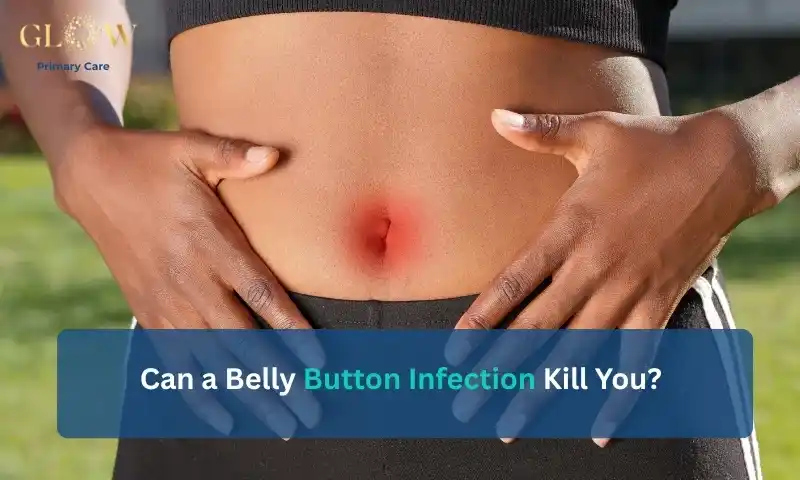
Yes, in rare cases. If a belly button infection is ignored for too long, bacteria can spread to deeper tissue (cellulitis) or enter the bloodstream, causing sepsis. Sepsis is life-threatening.
However, this only happens if early warning signs like spreading redness, fever, or foul discharge are completely ignored for days or weeks. With proper care, most infections heal without complications.
Bottom line: A belly button infection is not normally dangerous, but it *can* become dangerous if left untreated. In that case, you have to go for belly button Infection treatment.
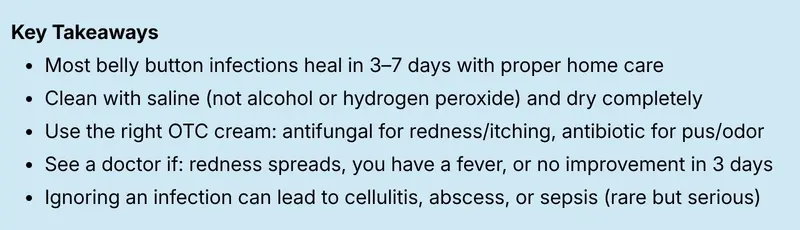
What Is a Belly Button Infection? Causes & Why It Happens
Your belly button traps sweat and dead skin, creating an ideal space for bacteria and yeast. When hygiene lapses, irritation or moisture leads to infection.
Why It Happens
Most infections occur when bacteria or fungi invade small cracks or irritated skin. Piercings, tight clothing, and poor drying after showers can all trap moisture. Over time, this leads to redness, itching, and discharge that signal an early infection.
Types of Belly Button Infections
- Bacterial infection: Often caused by Staphylococcus aureus. It produces pus, pain, and a foul odor.
- Fungal infection: Usually due to Candida, thriving in moist environments. It appears as a red, itchy rash.
- Cyst-related infection: Deep-seated swelling beneath the navel from a blocked duct or urachal cyst.
Can It Be Dangerous?
While most belly button infections remain minor, neglecting proper treatment allows them to worsen. In rare cases, bacteria can spread to surrounding tissue or even the bloodstream, a condition known as sepsis. So yes, a belly button infection can kill you if ignored long enough.
How It Differs from Ordinary Skin Irritation
Unlike mild irritation that clears up quickly, a true infection tends to worsen over time. It becomes painful, warm, and may ooze fluid. These signs indicate it’s time to consider professional belly button infection treatment rather than relying on home remedies.
Early Warning Signs of Belly Button Infections
Recognize these signs early to prevent complications:
- Redness that spreads – Mild pink is normal; spreading redness signals deeper inflammation
- Unusual discharge or foul odor – Clear, yellow, or green fluid with a bad smell
- Persistent itching or burning – Often indicates a fungal infection
- Swelling and tenderness – Sore to the touch, warmth around the navel
- Fever or general malaise – Your body is fighting an infection beyond the surface
What Does an Early Stage Belly Button Infection Look Like?
An early infection is often mistaken for minor irritation. Here is how to tell the difference:
Signs of an early-stage infection:
- Mild redness inside the navel (not spreading outward to the stomach)
- A small amount of clear or white discharge
- Slight itching or discomfort
- No fever, chills, or body aches
At this stage, home treatment usually works within 3–5 days. Clean gently, dry completely, and apply an over-the-counter antifungal or antibiotic cream.
When it is NOT an early stage: Redness spreading beyond the navel, foul odor, pus, fever, or pain that worsens after 48 hours.
Why is my Belly Button Red?
A red belly button is most likely a minor infection due to trapped moisture, sweat, or bacteria.
Common causes (ranked by likelihood):
- Bacterial or fungal infection – Warm, dark navels breed yeast or bacteria, especially after sweating or if you have a deep belly button.
- Contact dermatitis – Reaction to soaps, lotions, laundry detergent, or metal from a belt buckle/jean snap.
- Infected piercing or cyst – Redness around a piercing or a small tender lump.
Home care (try for 3 days):
- Clean twice daily with warm water and mild soap.
- Dry completely (use a cool hair dryer or clean cloth).
- Apply OTC antifungal cream for yeast, or antibiotic ointment if signs of bacteria.
What Happens If You Have Redness Around Your Belly Button?
Redness around your belly button usually means you have an infection, a skin irritation, or a hernia. The main causes are bacterial infections, yeast overgrowth, and contact dermatitis.
Common Causes
- Bacterial Infections: Bacteria can grow in deep or uncleaned navels, causing pain, swelling, warmth, and pus.
- Yeast Overgrowth: Fungi like Candida love warm, moist spots, leading to a bright red, itchy, or scaly rash.
- Piercing Irritation: New or uncleaned navel piercings often get red and sore from minor wounds or trapped sweat.
- Hernias: An umbilical hernia can trap tissue, making the area red, swollen, and very painful.
What You Should Do
- Wash the area gently with mild soap and warm water.
- Dry the belly button completely after bathing.
- Avoid putting heavy lotions or creams inside, which trap moisture.
- Wear loose cotton clothes to stop extra rubbing.
How to Treat a Belly Button Infection (Step-by-Step)
Step 1: Clean gently
Use warm saline (1 cup water + ½ tsp salt) on a cotton pad. Avoid alcohol, hydrogen peroxide, or harsh soaps.
Step 2: Dry completely
Moisture feeds bacteria and fungus. Pat dry with a clean towel or use a hairdryer on cool.
Step 3: Apply the right OTC treatment
Bacterial infection (pus, odor, pain): antibiotic ointment (e.g., Bacitracin, Neosporin)
Fungal infection (red, itchy, moist): antifungal cream (e.g., clotrimazole)
When in doubt, try antifungal first – fungal infections are more common.
Step 4: Wear loose, breathable clothing
Tight waistbands trap sweat. Cotton is best.
Step 5: Monitor for 48 hours
Improvement? Continue care.
Worsening? See a doctor.
How Long Does a Belly Button Infection Last?
| Type | Healing Time |
| Mild infection (caught early) | 3–7 days |
| Moderate infection (with OTC treatment) | 1–2 weeks |
| Severe infection (requiring antibiotics) | 2–3 weeks |
| Chronic/recurrent infection | Varies – needs medical evaluation |
See a doctor if: No improvement after 3 days of home care.
What Happens When You Ignore a Belly Button Infection
This step-by-step breakdown shows how a small local issue can progress into a condition that endangers your overall health

Stage 1: Localized Inflammation Turns Persistent
At first, redness and soreness remain near the belly button. Without cleaning or topical care, bacteria continue to multiply. The area grows warmer, more painful, and begins to crust. Early intervention here prevents nearly every later complication.
Stage 2: The Infection Spreads Below the Skin
When surface bacteria penetrate deeper tissues, cellulitis can develop. The skin becomes firm, swollen, and tender. At this point, home treatment rarely works. A doctor must prescribe appropriate antibiotics to halt further spread.
Stage 3: Abscess Formation
Pus gathers beneath the skin, forming a painful lump. Pressure builds, creating throbbing pain and occasionally fever. This stage often requires minor surgical drainage. Ignoring it risks rupture and bacterial leakage into the surrounding tissue.
Stage 4: Systemic Spread and Sepsis Risk
If bacteria enter the bloodstream, symptoms escalate quickly: fever, chills, fatigue, and rapid heartbeat. This condition, known as sepsis, is life-threatening. Though rare, it underscores why prompt belly button infection treatment is essential to prevent fatal outcomes.
Stage 5: Chronic Infection and Scarring
Repeated neglect can cause a chronic cycle of inflammation, discharge, and scarring. The tissue becomes less elastic, sometimes requiring surgical cleaning or reconstruction. Chronic infections also raise the risk of secondary fungal colonization.
Who Should Never Ignore a Belly Button Infection
Recognizing your risk category helps prevent severe complications and the need for intensive belly button infection treatment.

People with Diabetes
Diabetic patients should monitor redness, discharge, or warmth closely and seek medical evaluation at the first sign of infection.
Individuals with Weakened Immunity
Patients undergoing chemotherapy, long-term steroid therapy, or living with HIV are more prone to bacterial and fungal overgrowth.
Overweight or Obese Individuals
Deep navels trap sweat and debris. Limited airflow and moisture create an ideal habitat for microorganisms.
People with Piercings or Recent Surgery
Body piercings, laparoscopic incisions, or scars near the navel remain vulnerable until fully healed. Metal jewelry can harbor bacteria, while residual sutures may irritate the skin.
Infants and Elderly Adults
Newborns can develop umbilical infections (omphalitis) that progress quickly. Elderly adults, on the other hand, may overlook subtle symptoms due to reduced sensitivity or vision.
People Living in Hot, Humid Environments
Warm climates increase sweating, encouraging fungal infections such as Candida. Daily hygiene and breathable clothing become critical preventive steps in these conditions.
When to See a Doctor for Belly Button Infection:
These warning signs indicate the infection is no longer minor and needs professional belly button infection treatment.
Persistent Pain or Swelling
Continuous swelling around the navel or lower abdomen is an early indicator of cellulitis that requires antibiotics.
Pus or Bloody Discharge
Pus means the body is attempting to fight off invading microbes, but without proper treatment, abscess formation is likely.
Fever or Chills
When fever, chills, or fatigue accompany redness around the navel, it’s a sign that bacteria may have entered the bloodstream. Immediate medical attention is crucial to prevent sepsis.
A Lump or Hard Mass Near the Belly Button
A firm or painful lump could mean an abscess or cyst has formed beneath the surface. Medical drainage under sterile conditions is the only reliable method for recovery.
Spreading Redness or Skin Streaks
When redness begins extending beyond the navel or forms red streaks toward the abdomen, infection is advancing rapidly. This condition can spread through deeper tissues in hours.
Recurring Infections
If your belly button infection recurs, an underlying cause such as a cyst, diabetes, or poor hygiene may be to blame.
FAQs:
Q: How do I know if my belly button infection is fungal or bacterial?
Fungal (Candida): Red, itchy, moist, whitish film, mild odor
Bacterial: Pus, foul smell, pain, warmth, swelling
Q: Can a belly button infection heal on its own?
Rarely. Most require cleaning and topical treatment. Without intervention, they often worsen.
Q: Should I put hydrogen peroxide on an infected belly button?
No. Hydrogen peroxide kills healthy tissue and slows healing. Use saline or mild soap instead.
Belly Button Infection Care at Glow Primary Care
Even simple infections deserve attention. A short consultation ensures proper diagnosis and avoids unnecessary suffering. At Glow Primary Care, our team offers discreet, compassionate treatment and guidance to help you recover safely. Schedule a visit today or explore our patient education resources for more health tips.