


Not a Red Flag, Just Good Medicine
If you’ve received results from an X-ray, CT scan, MRI, ultrasound, or blood test, you might have seen phrases like:
- “Clinical correlation is recommended”
- “Clinical correlation advised”
- “Correlate with clinical findings”
- “Please correlate clinically”
- “Radiological correlation is recommended”
These phrases often feel confusing or even worrying. But they’re not a red flag; they’re actually a sign that your doctor is practicing thoughtful, evidence-based medicine. At Glow Primary Care, we help patients understand what these reports really mean and why this phrase matters for your health.
What Is Clinical Correlation?

The Simple Version
Imagine a radiologist is reading your chest X-ray and sees a small spot. That spot could mean several things: an old scar, a harmless growth, an infection, or something else. The radiologist can’t know which one without understanding your full story.
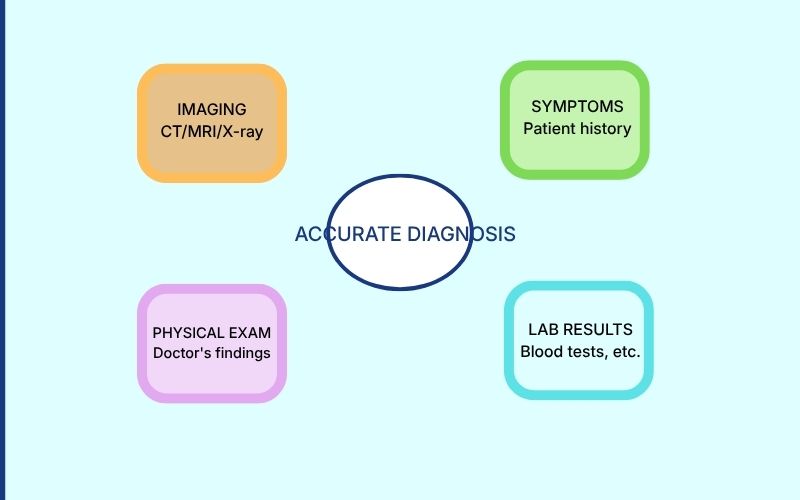
That’s where your primary care doctor comes in. You’re the person who knows if you’ve had a cough for 3 weeks, a fever, or recent exposure to someone sick. Your physical exam might show specific signs. Your symptoms paint a picture.
Clinical correlation is the process of putting all these pieces together.
Why Do Doctors Say “Clinical Correlation Is Recommended”?
Radiologists and pathologists use this phrase when findings are uncertain or could have multiple explanations. It’s not a dismissal; it’s a request for partnership.
Clinical Correlation Across Different Tests
Clinical correlation applies to all types of medical imaging and testing. Here’s how it works for each:
| Test Type | What Radiologist/Provider Might See | Why Correlation Matters |
|---|---|---|
| X-ray | Shadow in lung, bone density change, fluid | Does your cough match this finding? Is the bone change from age or injury? |
| CT Scan | Small nodule, lesion, swelling | CT scan correlation meaning: Does this need follow-up or just monitoring? |
| MRI | Disc bulge, joint damage, tissue inflammation | Radiographic correlation is recommended: Do your symptoms align with what MRI shows? |
| Ultrasound | Cyst, enlarged organ, blood flow abnormality | Clinical correlation meaning in ultrasound: Does this explain your pain or symptoms? |
| Blood Tests | High cholesterol, low iron, abnormal thyroid | Please correlate clinically: Do symptoms match lab findings? Other causes? |
Clinical and Laboratory Correlation

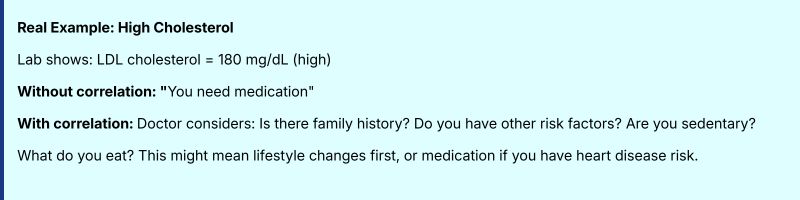
Suggest Correlation With Clinical and Laboratory Parameters
When this phrase appears on your report, your doctor needs to:

Does Clinical Correlation Mean Surgery? Correlation and Treatment Decisions
One of the most common worries: “If my report says ‘clinical correlation is recommended,’ does that mean I need surgery?” The answer is almost always no.
Radiological Correlation Treatment Decision Tree
Step 1: Abnormality found on imaging
Step 2: Does it cause your symptoms? (Clinical correlation)
Step 3a: YES → Consider treatment options (may include surgery, medication, physical therapy, or monitoring)
Step 3b: NO → Usually no treatment needed; monitor or reassure
→ Clinical correlation guides whether something needs treatment, not whether it exists.
How Your Primary Care Doctor Performs Clinical Correlation
At Glow Primary Care, we use a systematic approach to correlate all findings accurately:
Step 1: Detailed History-Taking
When did symptoms begin? What makes them better or worse? Any previous injuries, illnesses, surgeries? Family history? Current medications?
Step 2: Targeted Physical Examination
We look for specific signs that match (or don’t match) your scan findings: tenderness, swelling, range of motion, neurological responses, vital signs.
Step 3: Reviewing All Data Together
We synthesize imaging reports, lab results, exam findings, symptoms, and medical history into one coherent picture. Does it all fit?
Step 4: Follow-Up If Needed
Sometimes we order additional tests, repeat exams, or consult specialists to clarify findings and arrive at the best diagnosis.
What Should You Do?
Your Action Steps
- Don’t panic. This phrase is routine and doesn’t mean anything is wrong.
- Bring the report to your doctor if you haven’t scheduled a follow-up visit yet.
- Be honest about your symptoms. Tell your doctor exactly how you feel (or don’t feel).
- Ask questions. “Does this finding explain my symptoms?” “Do I need treatment?” “What should I do next?”
- Understand your options. Treatment isn’t always necessary, sometimes monitoring is the right choice.
- Trust the process. Clinical correlation prevents unnecessary procedures and harmful treatments.
Confused About Your Results? We’re Here to Help.
At Glow Primary Care, we specialize in helping patients understand their medical reports and navigate complex health decisions. Our doctors take time to explain what findings mean for YOUR specific situation. Schedule a Consultation Find Our Location
The Bottom Line
“Clinical correlation is recommended” is not a red flag; it’s a sign that your healthcare provider is practicing thoughtful, evidence-based medicine. It means they’re not jumping to conclusions based on one test alone. Instead, they’re gathering the full picture: your symptoms, your exam, your history, your other tests.
This approach prevents overtreatment of harmless findings and ensures that real problems get the attention they deserve. Many “abnormalities” on scans are incidental and completely benign. Clinical correlation separates the important findings from the noise.
If you have a report that mentions clinical correlation, take a deep breath. Schedule an appointment with your doctor, be honest about your symptoms, and trust that they’ll help you understand what it means for your health.